Congratulations upon being reappointed by His Excellency for a second term. From a Board perspective, how would you summarise the PAU’s journey in its first five years?
I must say that I am privileged to be reappointed for a second term, after chairing the founding Board of this Authority four years ago. I and my team have been privileged to have the opportunity to lead, what I can say, is Uganda’s very first petroleum regulatory agency. As such, we are proud to be part of our country’s history and we do pledge to do everything within our ability to ensure this oil resource is a blessing to our motherland.
The Petroleum Authority of Uganda is one of the three government institutions that were given the huge responsibility of managing the oil and gas resources in the country. As the Petroleum Authority of Uganda, we have the mandate to monitor and regulate all petroleum activities in the sector inclusive of the refinery, the transportation and storage of the oil and gas resources etc. The PAU itself was born out of a recommendation of the National Oil and Gas Policy (NOGP) of 2008 that led to the creation of the Petroleum Exploration, Development and Production Act of 2013, which is our enabling legislation. Actual operationalisation of the Authority, however, didn’t kick off until October 2015 when His Excellency the President of the Republic of Uganda appointed the first and founding Board of the Authority, which makes PAU five years old this October.
Upon inauguration, we hit the ground running because, on top of setting up the institution we also had to carry out the Authority’s mandate since there were already existing players in the sector that needed to be regulated. So, for the first year, three members of the Board inclusive of myself worked almost on a full-time basis, contributing to the development of regulation as well as the implementation of the existing laws. We also worked on the recruitment of the staff of the Authority, starting with Mr Ernest Rubondo as the first Executive Director of the Authority, who started work on the first of September 2016- nearly a year after the Board was inaugurated. From then, we handed over to him to continue the recruitment of more staff, beginning with the top management as well as carry out other day-to-day functions.
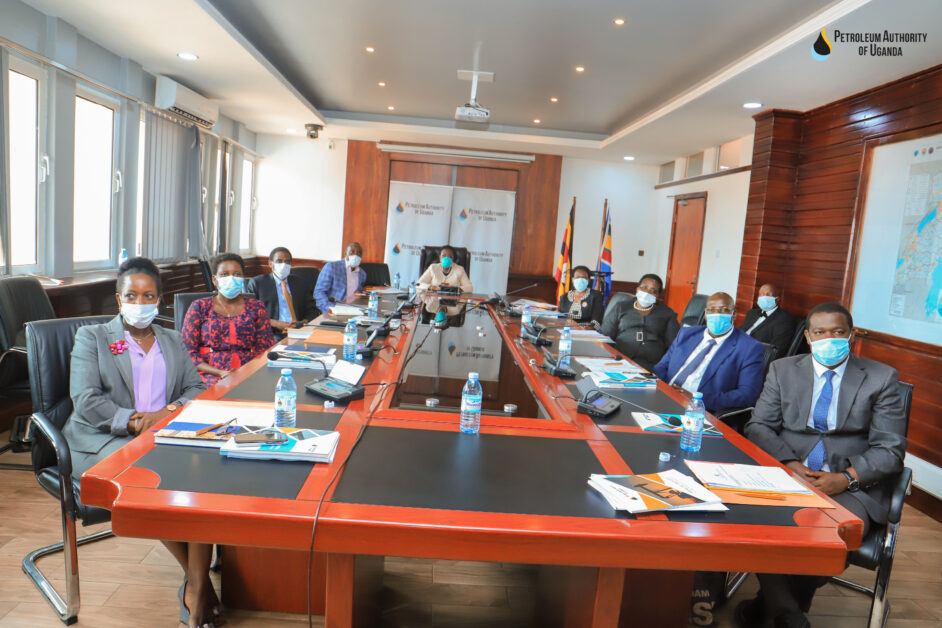
We then had to develop a brand identity for the Authority, then the vision, mission, core values and guiding principles, followed by the development of our first 3-year strategic plan. The first plan was three years and was largely focused around institutional development as we waited for full staffing of the Authority- most staff would join 2-3 years later.
Having developed the brand of the Authority and recruited the essential staff, we then focused on the development of regulations to activate the laws in the sector as well as developing our internal manuals to guide the work of the Authority, and ensure that we deliver our mandate effectively with proper guidelines.
It is on this solid foundation, set and monitored by the Board that many of the achievements made by the Authority in the last five years are built. This is a new resource that has the potential to drastically and positively change the economy and livelihoods of Uganda and Ugandans. This is why its utilisation needs to be strategically and prudently managed. We are committed to making this an “oil blessing” rather than an “oil curse” and this calls for appropriate monitoring, ensuring compliance with all the set laws and ensuring national participation so that the people of Uganda, and most importantly the communities where this resource has been discovered, do benefit from this God-given resource.
Have there been any challenges that you have had to overcome?
Of course, these achievements have not been without some challenges, but I think the major challenge we have faced rotates around lack of adequate financial resources to fund our activities – sometimes even when the little is released, it is released late. Yet we must work within the public procurement guidelines, so we sometimes are not even able to use the resources because they come late. That is why our staffing levels are still at 57% and yet activities have got to go on especially since we are approaching FID. We are also in need of an ICT data centre to help us organize our information for easy accessibility and enable real-time data accessibility.
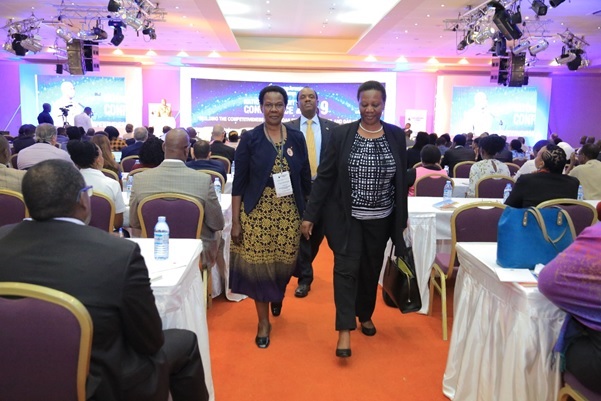
It has been challenging because we have been building the organisation while at the same time, we are expected to execute our mandate fully.
You also realise that the Authority was set up at a time Uganda was in the middle of creating regulations to operationalise the Petroleum Exploration, Development and Production Act of 2013. So, you can imagine a kind of transition where both the regulatory framework and the institution to implement the framework are created at the same time! This was also the time, some of the licensed oil and gas companies applied for production licenses, which were eventually granted in 2016 when the PAU was just one year old! Being a new kid on the block but regulating oil and gas veterans who have been in the business for 50-100 years, such as Tullow Oil, CNOOC and Total, has been remarkably interesting, exciting, and challenging five years.
I want to thank all our stakeholders- His Excellency the President, our mother Ministry and all other supporting government Ministries, Departments and Agencies, staff of the Authority, our licensed players as well as the civil society and the Ugandan public in general who have made these five years worthwhile.
 Letters to My Younger Self: Robinah Siima — “Success Is Quieter, But Richer”
You mention, setting up a solid foundation on which the Authority has run over the last 5 years. What are some of the principles that guide you as a Board in providing oversight to the PAU as a regulator of a multibillion-dollar industry to ensure you achieve excellence?
First and foremost, is having an independent and accountable governance structure, is a well-established principle of administration. We are an independent accounting body, with core values that govern the work of the Authority, and these include professionalism, responsibility to society, integrity, mutual trust, and respect and excellence in execution in whatever we do. Those guiding principles must be observed and we as a Board, therefore, must not only espouse them but also endeavour to practise them ourselves.

Lastly, we want to keep the public and all our stakeholders well informed about the role and responsibility of the PAU, so that they appreciate what we do. We have a balancing act to achieve– while we want to encourage and ensure lasting value to society by promoting the involvement of Ugandans, we at the same time, need to ensure that we create a positive environment, for the investors to also benefit from their investment. We, therefore, need to keep the entire public including the investors very well informed about our work, how we do it and what it is that we expect from everybody. Those are the key guiding principles.
Given all the groundwork that has been laid by yourselves and the other respective government and private sector stakeholders, the next 5 years are going to be full of activity. As the PAU Board, what will you be focusing on in the next 5 years as we enter the development phase? What do you see as the key tasks that the Authority must achieve in the next five years?
We are going to continue building on the work of the founding Board because we are yet to complete, for example, the institutional building. For instance, we are only at 57% of staffing levels, which means we need to recruit more staff to address some of the key areas that are becoming more and more important, in this development and production phase; so institutional building remains our focus.

We still must carry out our mandate to ensure that we encourage more exploration, to increase the resource base. We must now focus more on the timely development of the flagship Tilenga and Kingfisher Projects, as well as the Refinery and the East African Crude Oil Pipeline projects. These will need very close monitoring to ensure that they are implemented cost-effectively, so that we maximize the profits as a country. Therefore we need to recruit more staff to monitor all these projects more closely. We will for example need to set up more regional offices especially along the route of the pipeline, to bring us closer to the different projects that we monitor as well as set up the data centre that I mentioned earlier.
What key message would you like to send to Ugandans who aspire to see the oil resources cause transformation to Uganda?
That is a very important topic to discuss because, at the end of the day, oil and gas is a God-given resource that has the potential to turn around our social-economic welfare as a country. So, the first aspect that I want to emphasize to the public is that there are abundant opportunities for Ugandans and Ugandan companies and it is the mandate of the Authority to ensure that as many Ugandans as possible do participate, to create the lasting value that we are talking about. There is no way we are going to benefit unless we as Ugandans get actively involved in the provision of goods and services to this sector.
EXECUTIVE PROFILE: MS JANE NAMBAKIRE MULEMWA PH.D

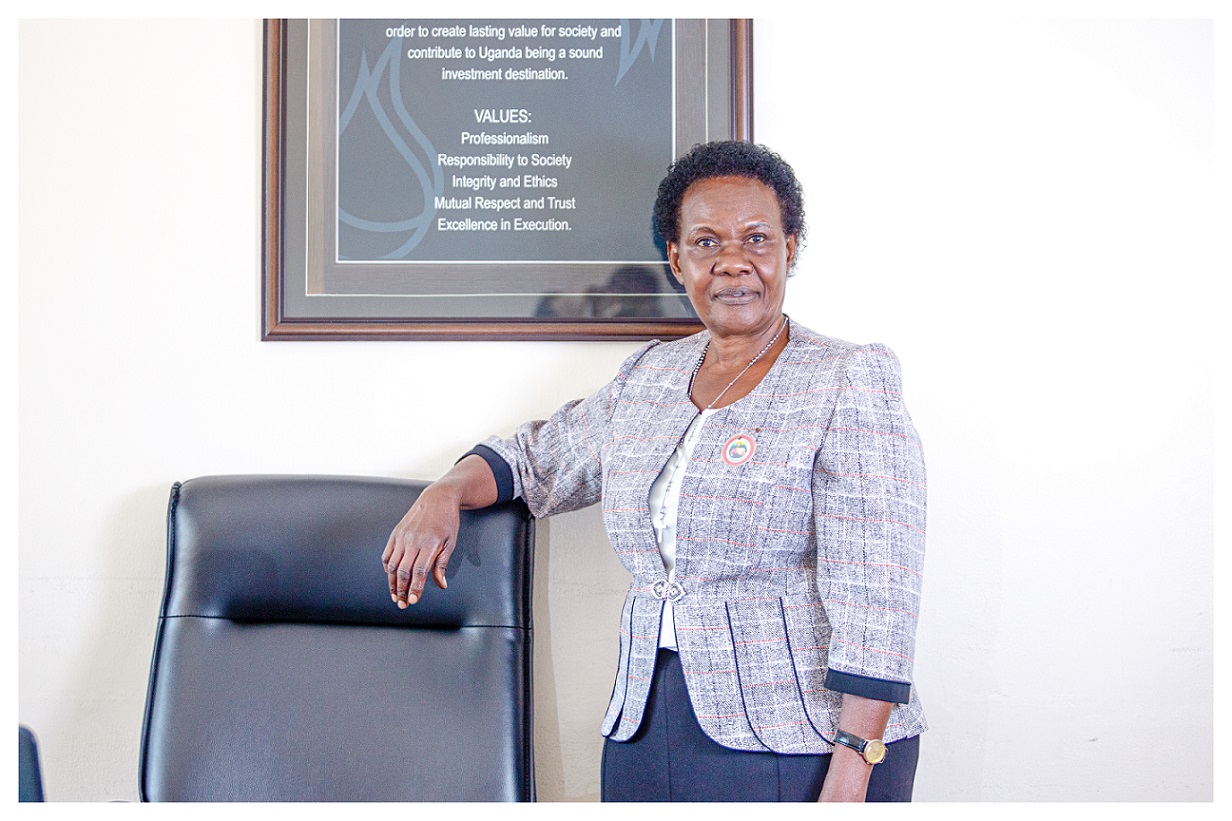
Ms Jane Nambakire Mulemwa, Ph.D. is an administrator, leader and scientist with a Ph.D. in Physical Organic Chemistry, from Queen’s University of Belfast, Northern Ireland. She has over thirty (30) years’ experience in leadership, administration, policy development and analysis, strategy formulation and evaluation, science education and academic research. She also possesses extensive experience in setting up and leading varied public and not-for-profit organisations such as: the Department of Science and Technical Education, Makerere University; the Forum for African Women Educationalists (FAWE), Uganda Chapter; and, The AIDS Support Organization (TASO). In October 2015, Dr Mulemwa was appointed by His Excellency Yoweri Kaguta Museveni as the Chairperson of the inaugural Board of the Petroleum Authority of Uganda. On 15th May 2020, she started a second term as Board Chairperson, following reappointment by the President.