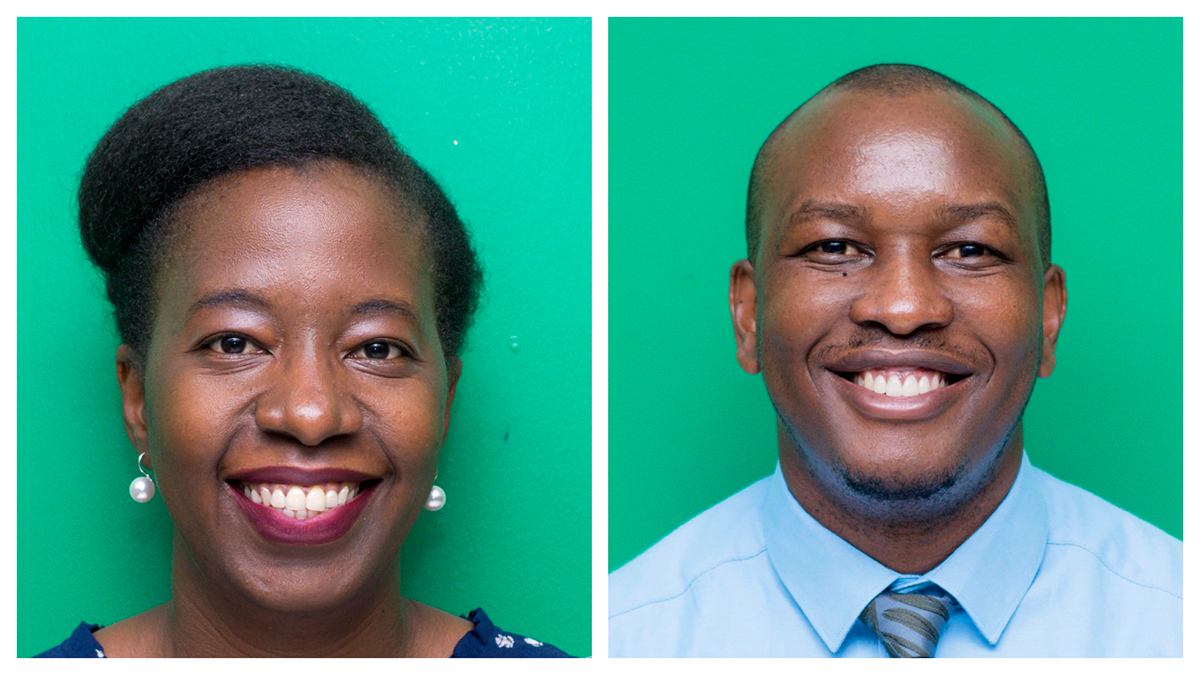
Can you quickly tell us about yourselves and your professional background?
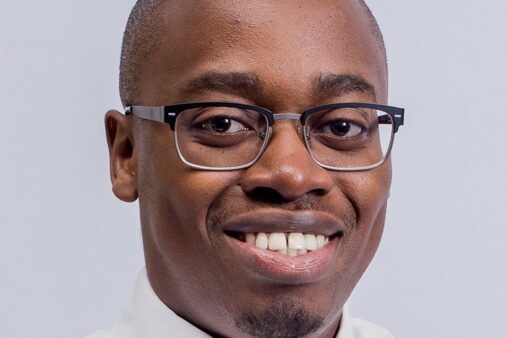
JMB: John Mark Bwanika is a medical doctor and E-health specialist. I am the Co-founder and Director of Operations (COO) as well as Head of Projects and Research at Rocket Health Africa.
I am also a global health research fellow with the National Institutes of Health (NIH) hosted at the Infectious Diseases Institute, Mulago Kampala. I graduated from Mbarara University of Science and Technology and I hold additional postgraduate accolades from the University of Edinburgh, Johns Hopkins University and Washington University. Before Rocket Health, I worked as a Clinical Research Coordinator at the Infectious Diseases Institute (IDI).
What inspired you to invest in Rocket Health/TMCG?
FN: When Dr Davis and Dr John Mark discussed the idea with me, I could clearly see that the idea would revolutionise healthcare. It was also a significant time in my life as I had just quit my job and I was really looking for a way to have a meaningful career. The mission of Rocket Health aligned perfectly with my career goals.
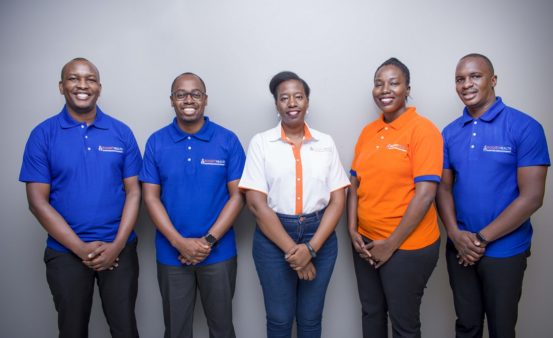
JMB: I went to school with a number of the other co-founders. I was with William in high school. Davis (the Chief Executive Officer) was also in the same high school as me for A-level. The other co-founder, Hope, was with us at Medical School in Makerere. I was in Mbarara but we were in the same year. The other co-founder Fiona was a known long-term family friend to Davis.
William and I had always dreamt of building a hospital, but after school, life took us on different paths. My path was in clinical research. After finishing medical school, I worked with the Infectious Diseases Institute, coordinating clinical trials in their research department. We were doing research related to HIV, Tuberculosis and Cryptococcal meningitis among others.
At the time, I also had my own private company called JM Healthcare, which was disseminating health information to schools and the public. I knew that the healthcare system had not been set up to take healthcare to the people, it was set up to be confined within physical buildings. Doctors were the custodians that held all information regarding health or how to manage medical conditions, and the only way to access them was by people coming and lining up, spending hours and hours in a hospital, speaking to them for only a few minutes and then going home.
So, even with my first company, the idea was about getting healthcare out to the people. And my initial idea was how to do more health talks, promote more preventive informative healthcare, empower more individuals to take charge of their health without us just waiting for them in the hospitals.
So, when we linked up with Davis and the rest of the team, we had all recognised the gaps within the healthcare system from the different vantage points that we were coming from. We also recognised the value that technology could play in advancing the quality of access to healthcare in a way that is affordable and scalable. For us, technology was key in going beyond the typical consultation room where one only serves the people that visit the hospital.
So, it was this background of a shared vision, a shared understanding of the challenges within the healthcare system and a good appreciation of how technology could actually help us bridge this gap, that enabled us to work together, bring the resources that needed to start the company and also dedicate intellectual input and time.

What kept you going even when the going became tough?
FN: I found comfort in the numbers. As a team of co-founders, we shared the risks, burdens and challenges and this helped reduce the strain on me as an individual. I also had faith and belief in the idea. We were certain that we would make it and that helped us persevere.
JMB: It is never easy. It is not even remotely easy, even right now. We are working in a field that is relatively novel globally. Even in the most advanced countries, telemedicine is still not mainstream, let alone in Africa. We are trying to deliver healthcare in a new and different way from how it has been delivered in thousands of years. As far back as even the African traditional society, healthcare was not decentralised or democratised. It’s a deep paradigm, cultural, economic and political shift and it takes time.
The challenges started from even us; to convince oneself to leave an assured way of making a living in a decent organisation to start working on something new that has no guaranteed chances of success. Then, convincing the immediate circles of family and people one works with, to help them see the vision of your new path. And for many, it doesn’t make sense, especially for doctors who can easily get a job anywhere in the country with decent pay and standard of living. And when you are working on something new, with no precedence in terms of business models, there is a lot of uncertainty both for yourself and the other stakeholders in your life.
Then there are the systemic challenges like the infrastructure to make things work; the cost of internet services, access to mobile phones, availability of the right technology, and yet these are determined outside our circle of influence. They are determined by taxes and government incentives, policies and so a number of these challenges were quite steep when we started. They still exist but many have since improved.
What have been your key highlights in the last 10 years?
JMB: The first is definitely deciding to work together, leaving our enterprises that we were working on and deciding to come and work together towards a common goal. This came with committing money and time, often working 16 hours a day since we still maintained our full-time jobs in the beginning.
One of the other major milestones was in 2015 when we landed one of our biggest projects, a 5-year USAID project, which allowed us to operate at a large level, delivering the service to security personnel in 50 districts in Uganda. So, that opened the path to the multiple projects that we have been able to do with different public health and research institutions.
 dfcu Bank and Monitor Publications Crown Season 7 Rising Woman Champions, Celebrating Uganda’s Top Women Entrepreneurs
Another major milestone was being able to get an angel investor, a high net worth individual to come in and finance our move, one from a much smaller office to our current address but also to set up the Rocket Health integrated service of a laboratory, pharmacy and a clinic. This allowed us to build this public-facing brand. And now, raising a Series A round which gives us the resources to expand and serve more people, not just in Uganda, but also eventually to expand to Kenya by the start of next year.
FN: The first contract we signed with an insurance company, UAP, was monumental. The first grant from USAID and the first line of credit we got to fund operations were equally important. The launch of the Rocket Health brand was an exciting stage in our journey. Then, there was the move from Rubaga to our current offices at Lugogo, which have seen the team grow from 30 to at least 150 people as we speak today.
I am excited about the next phase of the business. The USD 5 million investment that we recently secured is a huge endorsement of our potential and we have very grand plans for all our clients in Kampala, across Uganda and in Kenya.
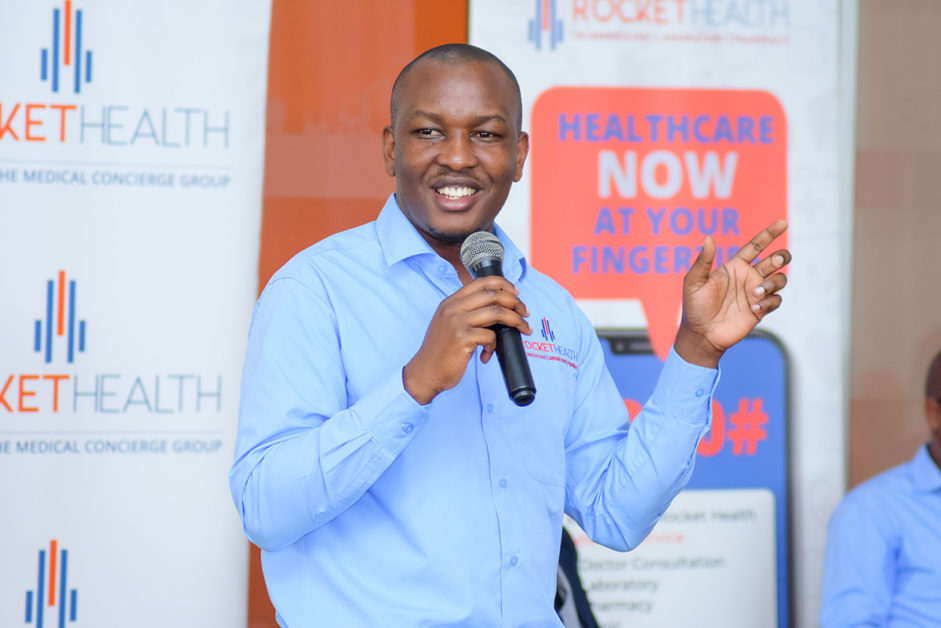
What’s your vision for the business/your department?
FN: My vision is for the organisation to not only be Africa’s leading telehealthcare provider, but I want us to be a world-class employer that nurtures fulfilling and enriching careers for our employees.
The $5m we have raised is to facilitate the expansion from the 40-50 km radius around Kampala that we currently serve to more people across the country. We will also be able to reduce the turnaround time for the people in far-off places. While people typically serve 4-5 hours in hospitals, our goal is to reduce that to 1-2 hours.
Beyond bringing the services closer, we also want to extend the range of our pharmacy services. When we extend our supply chains and import directly from the manufacturers, we hope to have a positive effect on the final price of our products.
JMB: We want to be a leading and world-class digital healthcare company in Africa; we want to be the healthcare provider of choice for everyone who has a mobile phone, who has access to the internet or any digital platform. That is the overall goal.
Over the next 18 months, we are going to focus on four things; one is to expand our presence geographically in Uganda. So, because right now our main dispatch area is Kampala and surrounding areas, if somebody makes an order for pharmacy or laboratory services from a far-off place (beyond 40km), the response time will be longer. We want to close that to a much shorter turnaround time. So, we are going to set up hubs and dispatch units closer to residential areas, closer to where they live and work. This is within Kampala, Greater Kampala and major cities and towns across the country.
Two, we are setting up a wholesale business for pharmacy and laboratory businesses. We want to make it easier for business owners, pharmacies, clinics, hospitals, cosmetic shops, schools that usually purchase these medical supplies by coming to Kampala with a sheet of paper, haggling all day and then getting onto a bus to take back their supplies. We want to make it so easy that from wherever they are, whether they are in Kampala, Mukono, Jinja, Gulu, Arua, they can just get onto an online platform, make their orders and we can deliver these products to them.
Thirdly, we are going to work on a mobile application. So, right now we are using third-party platforms like Facebook, Twitter, USSD and call centre software, but we want to merge all this into a mobile application. This integrated platform will make sure that people have more integrated medical records, there will be more security features and people will be able to do video and audio consultations within the app.
The fourth thing is that we want to work with other partners; laboratories and pharmacies throughout the country to service our clients who do teleconsultations with us but are in locations where we don’t have a physical presence. We want to leverage the existing physical networks to serve those clients.
In Kenya, we are going to be setting up a full-blown, four-way operation; a 24/7 call centre with medical professionals, a laboratory service for sample pickups and processing, a pharmacy and a clinic, as well as an e-commerce site which will also be accessible. Kenya’s operations will start in the first quarter of 2023.
How has your skillset and experience contributed to the growth of Rocket Health/close of $5m fundraising round?
FN: So, my fellow founders are doctors and I am the only one on the team who came in with a background in finance and management. So, I brought diversity to the team. During the fundraising, it was important to provide historical financial records, projections and sound analysis of the business and I delivered this. My audit background also means that I am keen on compliance and protecting the organisation from regulatory risks.
What are the key lessons you have learned throughout this journey? What message would you share with other start-ups?
FN: We have learned quite a lot over the last decade and in the most recent fundraising round. One, get your business model right. It is also important that you have accurate data and know your numbers by heart. Data influences decisions.
As founders, it also helped that we had different skill sets and experiences which helped us respect each other’s roles. I for example would not know where to start if asked to draw a roadmap for a technology product, and my colleagues are not exactly fans of reading balance sheets.