
By Our Reporter
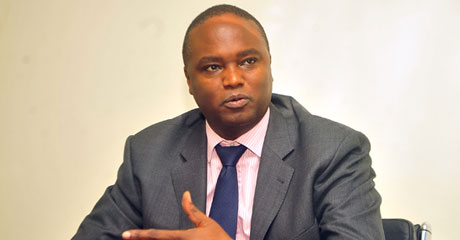
Patrick Mweheire, 44, is one of the few Ugandan CEO’s managing a commercial bank or multinational in the country. He’s a busy man who works long hours.
In December 2014, the Stanbic Bank board approved Mweheire as CEO, taking over from Philip Odera who’d been at the helm for 7 years. Mweheire joined Stanbic Bank in 2012, as head of the investment banking division of the bank.
This segment has been able to boost non-interest income of the bank. Stanbic is the largest bank in Uganda by assets (Ush4trillion – 2013), and by appointing Mweheire, has vindicated the thoughts of many, that there are Ugandans who can manage big time businesses in the country. The former Wall Street banker sat down with The CEO Magazine. Below are the excerpts.
How would you describe your management style?
I think it is a mix of being very hands on because I am a very detail oriented person. The guys who deliver will earn their space and those who don’t will spend a lot more time. Ultimately my job is to deliver results so I’m not here to be loved. I also live by example. I’m not afraid to work long hours. You know my background; I spent a grueling many years on Wall Street working 100 hours a week. I will work as hard as I need to and hopefully I will get the team behind me. I also think that while I’m a detailed guy, I do not necessarily need 100percent of everything to make a decision. I’ll do some discovery and when I’m comfortable, I’ll make the call.
You said you worked 100 hours a week on Wall Street. Do you still work 100 hours a week?
I don’t do 100 hours week but I can comfortably stay in the office till 10 pm. This after having been in the office by 7 am. I got used to it.
On a personal level, what drives you?
It is second nature. That is how I grew up. I started doing 100 hours a week when I was 23 so it is something I have been doing for a long time. So it is not that I am sitting there waiting for something to drive me. I’m trying to get work done; I also like troubleshooting. I spend a lot of time trying to figure out how to do things differently. There is also a lot of clientele. You know in investment banking we do transactions and you have to be available for your clients around the clock. Some of them could even be different jurisdictions. So if the London clients have a conference call at 5 pm, you have to be available.
Considering that your experience is from a background of investment banking and Stanbic Bank is a commercial bank? How do you think that Stanbic Bank will benefit from your investment banking background?
If you peel down investment banking, it is really an experience about managing client’s needs, which is very much what we need to be doing at Stanbic. The client focus is a key part of investment banking and that is something I am going to bring to Stanbic. The client service experience is something I have put as a top priority. I have created a new role for service delivery and I want our clients to be happy. Whether it is a Umeme corporate client or others in the Kikuubo Branch, I want them all to enjoy the experience.
If you look at what our corporate business is now versus what it was three years ago, it is not the same thing. There is a level of sophistication and a lot of cross sale. In the old days we were all about financing overdrafts and all that. But if you look at what we are doing with some of our clients, there are a lot of other banking products we have added. Ultimately this is where banking is going, when these clients grow bigger the more complex they become. They want hedging solutions, structured products and being able to cut paste such products, Stanbic is going to be big.
That sort of growth you’re talking about in sophistication in the corporate clients, is that indicative of how Uganda has grown or it is because of the international clientele you have in the market?
It is both. I think if you look at Uganda two years ago, you could count how many corporates in Uganda have more than US$100m of revenue. I haven’t done the numbers now, but I can tell you the number is north of 40 or 50. So, the market is getting sophisticated. There are bigger corporates that have bigger requirements. They are importing a lot so they need to protect themselves. We play a very important role being in between and we are seeing a lot of activity from investors whether in Private Equity in evaluating opportunities in Uganda.
 Airtel Africa and SpaceX Announce Strategic Partnership to Launch Starlink Direct to Cell Connectivity Across Africa
So looking at the way banking is structured in Uganda, there is still huge dependence on short term deposits, which results into short term credit and higher interest rates. How would you place Stanbic Bank in the driving seat to access long term funding at lower costs?
That is a very important point and not understood by many. There is a lot of pressure on banks to finance but if you look, there is a structural issue. If you look at other countries and you break down financial assets of banks, pension funds, institutional money and hedge funds, banks generally do like 30% of lending. 70% is done by non-banking institutions. In Uganda we have the reverse problem. One of the challenges is how do we get long term capital for the banks so that we can leverage it? In fact one of the things you will see me do in the first quarter is to tap the international loan market to borrow some money for Stanbic.
Second thing is how to better organize our own savings as a country. For example NSSF is sitting on US$2bn and that money is in treasury bills and bonds, where it shouldn’t be. That money should be looking for long term investments so we should be doing 30 year bonds and NSSF funds projects like Karuma and Isimba among others. The longer term is there on the international market, we just have to find it.
Speaking of credit, the sector has been hit by impairment expenses, bad loans, write-offs and non-performing loans and assets. Is this going to change anytime soon? Are you going to change anything at the bank to avoid such scenarios?
As Stanbic Bank, we’ve already seen that reduction and running below the sector average. Part of this is because we took our pain upfront in 2012 and 2013. A lot of banks are going to take their write-offs in 2014. For us the NPL’s and write-offs story is an old one.
If you look around the industry, part of that is legitimate because you remember what happened with the high inflation, prime lending rates went to 30%. It is hard for businesses that have a 10% margin to afford 30% financing, so to some extent I do not blame the people who got into trouble.
What we need to deal with is the fraud. There’s some fraud that comes through collusion with staff so you end up getting wrong collateral. There was a problem of overvaluation of property and we ended with little or no collateral. For me that kind of NPL is unacceptable. As for the macro-economic risks, those are understandable.
We are beginning to see those macro-economic risks like the depreciation of Shilling to levels last seen in 2011.
If you remember in 2013, the Uganda Shilling appreciated by 6%. It was the only African currency at the time appreciating against the Dollar.
People are still apathetic towards commercial banks if the numbers of dormant accounts published by the banks are anything to go by. What is driving up the rising numbers of dormant accounts? What is pushing people away?
I think what we as a banking industry struggle to show the value to our customers. People are quick to point out a charge by a bank but for us, that charge is the cost of doing business. If we open a branch, we have bills to pay, rent and staff costs. How are we going to cover those costs is the discussion we should have with the clients. We are providing a service at the end of day and someone is going to pay for it.
So, costs appear to be one of your biggest worries. You want to cut down on the cost to income ratio of the bank. How are you going to do this?
It is all about embracing technology. We have a high cost to serve. What I am going to do is to drill down and understand. For example, there are a lot of people who come through the branch and queue up only to check balances on their accounts. Should that really be the case? They are crowding the branch yet there are people ready to transact. What about putting an automated balance checking machine so that we reduce the cost of serving our customers?
The other thing I am going to review is like what things we can take out of branch. For instance, should all cheques in the western region be done in the Mbarara branch? Having synergies takes costs down and makes the bank more efficient.
Does this mean branches could be reduced and lead to staff lay-offs?
We might shrink the branches and I do not think we are just going to shutdown branches. It is not about saying we are going to cut down staff but it is being more efficient. We are 2,000 staff right now. If we can keep that way for the next 3 years but yet reduce the cost to income ratio, that would be good. Over last five years, there have been more banks opening branches, so you can’t sit static.
