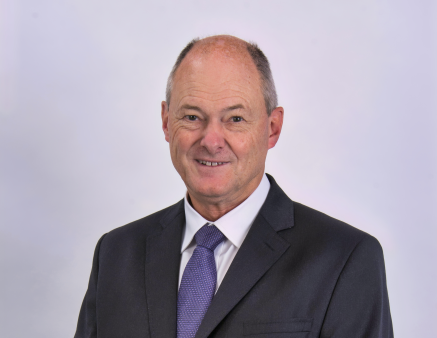
Travelling in rural Uganda and interacting with the population whose farming activities are imperiled by unprecedented rainfall patterns, one is likely to hear farmers who have worked the same land for decades say, “The seasons no longer speak to us in a language we understand.”
Such words captured by Bank of Uganda (BoU) Deputy Governor, Micheal Atingi-Ego reveal the essence of the challenge that [African] central bankers have to deal with as their traditional economic models on control of prices, interest rates and inflation struggle to speak the new language of climate change.
Elsewhere across Africa, Mr Atingi- Ego provides a vivid example of Hurricane Idai which caused severe flooding across Mozambique, Malawi, and Zimbabwe, leaving more than physical devastation in its wake.
The severe floods unleashed a cascade of devastating shocks, claimed lives, shattered livelihoods, and reverberated through the very fabric of the affected economies.
Supply chains crumbled, food prices were destabilised, energy costs rose and the established monetary policy frameworks were challenged.
The banking industry remains at crossroads with climate transition risks– whether to continue funding fossil fuels and other carbon emitting sectors for quick cash or switch to green project financing to achieve long term Environmental, Social and Governance gains.
Micheal Atingi-Ego’s response to this dilemma is straight and simple; he wants to see more credit extension into non- carbon sectors that must deal with climate change related risks especially with Ugandan bankers.
Mr Atingi-Ego also expects banks to come clean in their climate and sustainability reports, vigorously disclose their social and environmental initiatives as well as avoid any greenwashing claims.
The Deputy Governor had a stimulating climate change conversation last week at the IMF – BoU Peer-to-Peer Event on Climate Change Modelling for Monetary Policymaking.
Mr Atingi-Ego was meeting with IMF officials and African central bankers last week at Lake Victoria Serena Golf Resort & Spa on the outskirts of Kampala, Uganda capital.
That said, the climate conversation has become a bit stiffer after U.S President Donald Trump issued an executive order to withdraw from the Paris Agreement under the United Nations Framework Convention on Climate Change.
Trump is also set to revoke any purported financial commitment made by the United States on climate change, especially at the global level.
The U.S viewed as a key global player in several climate change initiatives could be a major setback for some countries. But some African central bankers say they’re undeterred by the move.
Shortly after the U.S withdrawal from the Paris Climate Agreement, the Federal Reserve Board also announced its withdrawal from the Network of Central Banks and Supervisors for Greening the Financial System (NGFS).
The NGFS, launched at the Paris One Planet Summit on 12th December 2017, is a group of central banks and supervisors, which on a voluntary basis are willing to share best practices and contribute to the development of environment and climate risk management in the financial sector.
The group also mobilises mainstream finance to support the transition towards a sustainable economy.
Trump’s decision has recently sparked major exits from the Net Zero Banking Alliance, a group of leading global banks committed to aligning their lending, investment, and capital markets activities with net-zero greenhouse gas emissions by 2050.

But let us also imagine the Paris climate agreement did not exist altogether, would African countries fold back and fail to address their climate challenges?
African central banks are challenging the narrative of overreliance on ‘outsiders’ and are now taking strategic positions to support their countries’ efforts towards shifting into fully-fledged green economies. Of course many central banks face different economic conditions, and their responses will be structured according to what they face in their home countries.
Mr Atingi-Ego in his introductory remarks at a recent meeting with other African central bankers, laid bare how the climate change risks have become existential to African economies. A risk that must be dealt with at first head.
The Deputy Governor identified three critical dimensions of this challenge: First is the increasing frequency and intensity of extreme weather events that are creating “climate-induced volatility” in most economies.
He says that in sub-Saharan Africa alone, there’s an increasing frequency of climate-related supply chain disruptions affecting economies over the past decade. These disruptions are not merely temporary shocks – they are becoming structural features of the economic landscapes.
Secondly, the changing rainfall patterns and rising temperatures are disrupting agricultural productivity patterns.
“This is not just an environmental concern – it is a direct challenge to price stability. When food constitutes a significant portion of our regional Consumer Price Index (CPI) baskets, climate-induced agricultural volatility becomes a central monetary policy concern,” he says.
Thirdly, the global transition to a low-carbon economy, while inevitable, presents unprecedented challenges for financial systems recognising that transition risks could significantly affect bank lending portfolios in the region, creating potential stability risks that we must factor into our monetary policy decisions.
“Our traditional monetary policy frameworks were designed for a world of more predictable economic cycles. They rely on historical data patterns that climate change is rapidly rendering obsolete. Speaking to central bankers across the region, I hear the same concern: our models are increasingly struggling to capture the new reality of climate-influenced economic dynamics,” he says.
To fully grasp the matter at hand, the 2024 NGFS technical document on acute physical impacts from climate change and monetary policy reveals how negative impacts from severe weather events are not limited to the destruction of output, capital, and real estate but extend to the broader economy.
This is because supply, demand, and financial channels amplify and propagate the effects of the initial shock.
The document shows that indirect costs of extreme weather events include economic losses from unusable infrastructure, lower investment and consumption demand due to declines in wealth, disrupted trade flows, and uncertainty about future climate events.
 Saving Smart: Israel Arinaitwe on How Ugandans Can Build Wealth from Any Income Level
Production of goods and services may decline because of labour shortages if workers are displaced or are diverted to reconstruction efforts.
When insurance mechanisms fail to carry a significant share of the costs, the burden placed on government finances limits the space for other productivity-enhancing public investments.
Econometric studies on the macroeconomic effects from severe weather events confirm that in the immediate aftermath of a severe weather event, both the level and growth rate of Gross Domestic Product (GDP) drop.
Depending on the study, GDP growth rates decline by more than 0.5 percentage point in the year of the shock, for very severe events, and can reach significantly higher values for the worst events.
Over time, GDP growth recovers, but there is no consensus whether the economy returns to its pre-shock path for the level of GDP, as suggested by the neoclassical growth model, or continues at a lower path.
While the output effects of severe weather events are now relatively well understood, the inflationary consequences of severe weather events remain understudied.
The nascent literature has identified that severe weather events tend to be inflationary, primarily through higher food prices associated with negative supply impacts from temporarily increased temperatures, storms, flood, or precipitation.
These findings suggest that the supply-side effects associated with physical hazards dominate for agricultural products whereby an increase in monthly mean temperature results in inflationary effects mainly in summer and autumn.
The net impact on inflation remains to be understood because it depends on the relative balance between the demand and supply effects from physical hazards.
Monetary policy decisions will likely be affected by an expected increase in the frequency and severity of severe weather events.
Severe weather events are largely unpredictable and thus resemble other shocks that unfold over the business cycle and to which monetary policymakers tend to adjust monetary policy.
Dr Louis Kasekende- former Bank of Uganda Deputy Governor and current Executive Director of the Macroeconomics and Financial Management, Institute of Eastern & Southern Africa, based in Harare, Zimbabwe, points out that over the past 20 years, the intensity of drought, flood events have all increased with extreme concerns on price stability and financial stability.
“Just take the drought that affected Zambia and Zimbabwe, we’re talking about price increases of 20 to 25 percent of food. But at the same time, there was an impact on power generation in Zambia and Zimbabwe,” Dr Kasekende says.
“The call for different central banks is that lets put our minds together to incorporate climate related shocks in the models we use,” he notes.
Whereas there’s uncertainty on how climate change could affect food prices, its comforting to note how there’s ongoing work in different central banks to incorporate the climate risks.
“Let us have a working group to share information, at MEFMI, we have been promoting partnerships, and a better understanding and information sharing between the Oxford Martin School and GIZ, so that we can have climate related models. We’re calling on the IMF and the academia to help in innovative ways of managing these scenarios,” Dr Kasekende says.
Dr Kasekende explains that while a lot of Sub Saharan Africa depends on public instead of private resources in combating climate change. Given the withdrawal of the US, the message becomes stronger that African countries can’t rely on public resources for financing climate related challenges and mitigation.
He says there’s a need to recognise that many institutions have capacity gaps, and called for strengthening their skills in this area of climate change as a priority.
Suzana Camacho Monteiro, Angola’s central bank Board Advisor highlights that as central banks navigate the climate crisis, they face a challenge of reliable data for modelling climate change scenarios.
Back home in Angola, Suzana shared her experience how the central bank is working with the Ministry of Environment to collect and interpret climate data to predict future scenarios.
“As a first step, we are developing a framework to understand the climate related impact on the economy. We began by conducting a benchmark with some African central banks and Europe. We found a challenge how central banks should quantify the physical and transitional impact of climate. We have developed some models on climate inflation including extreme weather events leading to high food prices, oil inflation and green inflation,” she says.
The Central Bank of Kenya is engaged in monthly Agriculture sector survey – to generate high frequency data on agricultural prices and output expectations in different parts of the country, and closely follow regular climate/weather forecast updates from the Kenya Meteorological Department and the World Meteorological Organisation inform projections of food inflation and agricultural output.
However, these weather projections come with a huge uncertainty especially in a longer horizon.
Mr Atingi-Ego suggests that there’s need for African central banks to create regional climate-economic research programs and centers, establish regular peer learning sessions and develop shared databases and modelling resources.
Mr. Andrew Berg Deputy Director of IMF’s Institute for Capacity Development notes that while the Fund is a fairly new player when it comes to climate change— the IMF developed the
Climate Strategy in 2021 and a lending instrument (the Resilience and Sustainability Fund) which was approved in 2022.
The Resilience and Sustainability Facility (RSF) provides affordable long-term financing to countries undertaking reforms to reduce risks to prospective balance of payments stability, including those related to climate change and pandemic preparedness.
“We have since ramped up our CD work through training courses and the deployment of various tools,” Mr Berg says.