The National Planning Authority (NPA) has unveiled the history and analysis of Uganda’s Economic Development since the year, 1986.
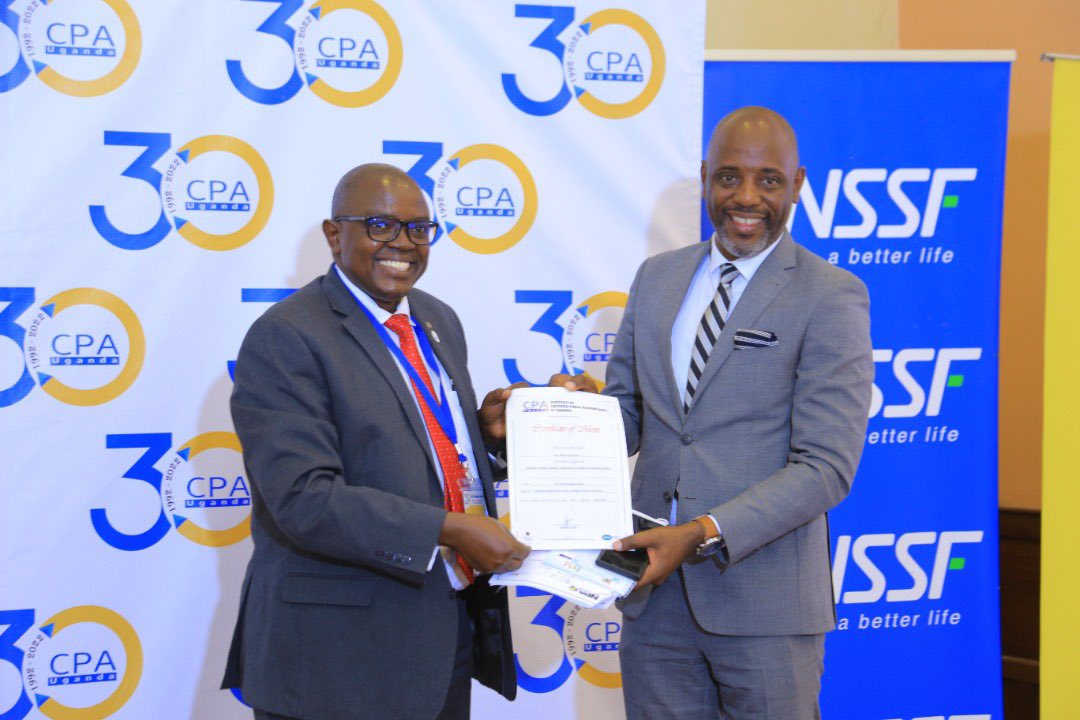
The analysis was given by Dr Joseph Muvawala, Executive Director, NPA at the 10th CPA Economic Forum held recently at Imperial Resort Beach hotel, Entebbe, under the theme “A Responsive Economic Development Agenda”
The forum was held to discuss economic development strategies that address the most pressing needs of society in a timely manner.
Muvawala, who was the Guest of Honour, said that since 1986, Uganda has always aspirated to transform from a peasant to a modern and prosperous country guided by deliberate policy efforts
He revealed that in FY 1986/87, the economy was characterised by, low inflation estimated at 215 percent, a low GDP of UGX 43 Billion and low per-capita income of only USD 258.
To stabilize the country and resuscitate the economy, he said that the government undertook a number of reforms; including the Reconstruction and Rehabilitation Program, the economic recovery program, the regulation of the parallel foreign exchange market, the liberalization of commodity marketing, privatization of state-owned enterprises among many others.
From 1997 to 2009, Muvawala says the government resorted to poverty eradication and expansion of public services, having restored security and political stability, and economic growth.
“Focused government attention on poverty eradication and provision of public services led to continued economic growth, and improvement in people’s living standards. By FY2010/11, GDP had soared to UGX 10.861 trillion, per-capita income had increased to USD 647, and Life expectancy increased to 50.4.”
He revealed that the 25 percent Millennium Development Goal (MDG) target of the population living below the poverty line was achieved in FY2010/11.
The Growth and Social-economic Transformation Phase NDPI, NDPII & NDPIII (2010-to-date)
According to him, the emphasis of economic policy has since shifted from poverty eradication to economic growth and socio-economic transformation where the government launched her vision 2040 which seeks to transform the country from a peasant to a modern and prosperous country within 30 years.
“While the first NDP (NDPI) focused on “Growth and Employment”, the second NDP (NDPII) focused on addressing the drivers of “Uganda’s Competitiveness” as an investment destination for Private Investments.”
Below is the full keynote address (economic analysis)
Executive Summary
This paper has analysed the phenomenon of a responsive economic development agenda. It undertakes this analysis through seven (7) sections, that is: An Introduction; Stylized facts about Uganda’s development; presenting and discussing what a conceptual framework for a responsive economic development agenda is, Defining what a responsive economic development agenda should be in the current realities of shocks and risks; and ultimately, specifying some roles for the Accounting profession and ICPAU, towards a responsive economic development.
Responsiveness is the ability to respond appropriately to something. It relates to flexibility and improvement of something. In essence, a responsive economic development agenda is one that is able to respond appropriately to the different needs of its constituents and any other aspect as may arise. Specifically, it should be alive to various development bottlenecks and rigidities in the different development themes (fabrics) such as: politics; society; and economics. Additionally, it should also address and incorporate and the other development facets which are cross-cutting in nature, like: Financing; ICT; Implementation, Monitoring and Results Reporting; Risk Analysis and Mitigation; and the Policy, Legal, Regulatory, Governance and Institutional Frameworks.
The paper also specifies a number of policy recommendations stipulating how a responsive economic development agenda for Uganda should be, especially in the current realities of shocks and risks. It is therefore expected that the various policy recommendations, as discussed in the paper will help ICPAU and Accountancy practitioners, Government and other economic development stakeholders reflect upon this responsive economic development agenda, adopt and implement it accordingly.
1.0. Introduction
1.1 Economic Development has been defined differently by different scholars and practioners but it is focused towards the goal of improving people’s living standards and their self-esteem needs. It is also geared towards attainment of freedom from oppression and attainment of a greater choice.
1.2 Economic Development is also defined as a process by which the economic wellbeing and quality of life of a nation, region, local community, or an individual are improved according to targeted goals and objectives. It entails policy interventions aimed at improving people’s well-being, market productivity and economic growth among others.
1.3 It is also the concerted effort on the part of the responsible governing body in a county (city) to influence the direction of private sector investment towards opportunities that can lead to sustained economic growth and development. Economic development is way much broader than the economic growth.
1.4 Responsiveness is the ability to respond appropriately to something. It relates to flexibility, improvement and resilience building of something. In essence, a responsive economic development agenda is able to respond appropriately to the different needs of its constituents and any other aspect as may be deemed fit. A responsive economic development agenda is also one which is able to adequately respond and adjust to shocks and risks in these changing and turbulent times. The different tenets of a responsive development economic agenda are discussed later on in the paper.
1.5 The paper is organized in such a way that: Section one makes an Introduction; Section Two provides a brief history and stylized facts about Uganda’s Development; Section Three analyses the Theories of Economic Development; and Section Four describes what a responsive economic development agenda is and what needs to be undertaken to make it responsive. On the other hand, Section Five discusses what a responsive economic development agenda for Uganda should be, especially in the current realities of shocks and risks. Section six discusses the role of ICPAU and the Accounting profession in creating a responsive economic development Agenda while Section Seven makes a conclusion.
2.0. History and Stylized Facts about Uganda’s Economic Development
2.1. Over time, Uganda’s aspiration to transform from a peasant to a modern and prosperous country has been guided by deliberate policy efforts. It has been a consistent and long-term aspiration pursued over time by the Government. Underpinned by a stable security, political and macroeconomic environment, this journey can be summarized into three stages:
i) Fundamental Economic Reforms and Decentralisation Phase (1986-1996)
In FY 1986/87, the economy was characterised by, low inflation estimated at 215 percent, a low GDP of UGX 43 Billion and low per-capita income of only USD 258.
To stabilize the country and resuscitate the economy, the government undertook a number of reforms and implemented a number of programs. These included: a) The Reconstruction and Rehabilitation Program;
b) The Economic Recovery Program;
c) The Regulation of the parallel foreign exchange market;
d) The Liberalization of commodity marketing;
e) Privatization of state-owned enterprises; and
f) Restructuring of Government to reduce public expenditure and increase
effectiveness and efficiency in service delivery;
g) Introduction and operationalization of the Decentralization policy in 1993.
ii) The Poverty Eradication Action Plan (PEAP) – (1997-2009)
After restoring security and political stability, economic growth had once again resumed; government’s attention was turned to poverty eradication and expansion of public services in line with the Millennium Development Goals (MDGs) with continued deepening of decentralization. Focused government attention on poverty eradication and provision of public services led to continued economic growth, and improvement in people’s living standards. By FY2010/11, GDP had soared to UGX 10.861 trillion, per-capita income had increased to USD 647, and Life expectancy increased to 50.4.
The 25 percent Millennium Development Goal (MDG) target of the population living below the poverty line was achieved in FY2010/11, five years ahead of the year 2015. In addition, external debt service requirements fell from 23 percent of export earnings in FY 1999/2000 to 5.2 percent of exports in FY 2013/14.
iii) The Growth and Social-economic Transformation Phase NDPI, NDPII & NDPIII (2010-to-date)
During this period, the emphasis of economic policy shifted from poverty eradication to economic growth and socio-economic transformation. Government drafted and launched Uganda Vision 2040 which seeks to transform the country from a peasant to a modern and prosperous country within 30 years. Government has planned to achieve this Vision through a series of six five-year plans.
While the first NDP (NDPI) focused on “Growth and Employment”, the second NDP
(NDPII) focused on addressing the drivers of “Uganda’s Competitiveness” as an investment destination for Private Investments. Private investment is critical for Sustainable Wealth Creation, Employment and Inclusive Growth. Under NDP I & II, government has focused on investing in Infrastructure. Currently, the NDPIII goal is aimed at increasing household incomes and quality of life. The theme for the NDPIII is “Sustainable industrialization for inclusive growth, employment and wealth creation”. The NDPIII also have 20 Development Programmes.
2.2. The Comprehensive Development Planning Framework (CNDPF) was developed to guide development and socio-economic development in Uganda. It articulates development through the 30-year Vision 2040, operationalized through three 10-year
Development Plans and six 5-year National Development Plans. Specifically, the NDP focused on three opportunities of Agriculture, Tourism, and Minerals, Oil & Gas (ATMs); and two fundamentals of Human Capital Development and Infrastructure Development.
The desire for meaningful transformation formed the basis of thought for NDPIII goal of “Increasing Household Incomes and improving quality of life”; this is expected to be achieved through “Sustainable industrialization for inclusive growth, employment and wealth creation”. The NDPIII is also anchored on 20 Development Programmes.
2.1. Uganda’s growth performance over the years paints a mixed image; with high performance in some episodes and a low performance in other episodes. Uganda’s GDP growth has been relatively strong between the mid-1990s and the mid-2000s, but started decreasing after 2006 (with the exception of 2011 and 2019) where it grew at 9.4 percent and 6.4 percent, respectively. With the occurrence of the COVID-19, GDP growth reduced to 2.9 by the end of 2021. The movements in the GDP per capita graph also mirrors the GDP growth graph, decreasing from 7.3 percent in 2006 to 2.3 percent in 2010, increasing to 5.9 percent in 2011, 2.9 percent in 2019 and 0.35 percent in 2021.
Nonetheless, Uganda’s growth performance has been below that of its East African Community counterparts since 2010, with the exception of 2011.
2.2. The sectoral value added growth also paints a mixed picture with industry majorly dominating service and agriculture in the earlier years, and service growth dominating industry and agriculture in the period after 2009, albeit with a sharp decrease in 2017 before re-bounding thereafter. This is as illustrated in figure 2.
2.3. The World Bank (2022) notes that Uganda’s economic growth is driven by changes in per-worker productivity with-in the sectors and labour re-allocation to high productive sectors, especially in the early 2000s. However, this labour shift slowed down significantly after 2011 and this together with unfavourable labour re-allocation effects has broken the momentum of Uganda’s productivity and growth.
2.4. Uganda’s economy is undergoing sectoral transformation with the agriculture sectoral contribution of GDP declining from 53 percent in 1990 to 36 percent in 1997, when the services sector overtook it. To date the services sector contributes up to 42 percent of GDP while agriculture contributes 24 percent. On the other hand, the industry portion of the value added has been averaging 7-8 percent before 2008. However, it rose to 16.4 percent during 2009 and has maintained the same average percentage of the GDP to date. It is usually expected that structural transformation has to be from agriculture, through industry, to service; however, the Ugandan story is different.
2.5. The UNHS 2019/20 Report indicates that Uganda has a working population of 21.4 million people, 74 percent of whom are actually engaged in work. Although there are more females (53%) in the working population than males (51%); the population of working males is higher than that of working females at 78 percent and 71 percent respectively. Additionally, majority of the population is employed in the subsistence agriculture sector at 52 percent followed by paid employment at 47 percent. More than half of the females (55%) are employed in subsistence agriculture.
2.6. The percentage of the Uganda’s population in poverty reduced by 1.1 percentage point, from 21.4 percent in 2016/17 to 20.3 percent in 2019/20; although the reduction is not that significant. Critical to note, the absolute number of people living in poverty increased from 8 million to 8.3 million respectively over the same period. This simply implies that, one in five persons in Uganda lives in poverty. Overall, the incidence of rural poverty is more than two times higher than that of urban poverty, but the gap seems to be closing especially with strong growth in agriculture.
2.7. At regional level, between the 2016/17 and 2019/20 period, poverty increased and was more severe in the northern region both in terms of absolute numbers (3 million persons) and by percentage share of the population (35.9%) compared to the 2012/13-2016/17 period when poverty was higher in the eastern region. This marks a switch in severity of poverty at region level. Additionally, there are about 3.5 million persons living below the food poverty line. Sub-regions of Bukedi, Karamoja and Acholi have the highest proportion of food poor households with Acholi having the sharpest increase in food poverty by 29 percent. Fundamentally, the COVID-19 pandemic has reversed Uganda’s poverty reduction path.
2.8. Uganda has maintained medium level of inequality for some time. For instance, the national Gini coefficient ranged from 0.41 in 2005/6 to 0.42 in 2016/17 and now stands at 0.41 in 2019/20. The mean monthly consumption per adult equivalent increased from UGX 96,918 in 2016/17 to UGX 96,774 per month in 2019/20. Spatial inequalities remain a significant development challenge in Uganda. The consumption gaps between the rich and the poor seem to have remained unchanged for the rural and urban areas as measured by the gini-coefficient. The gini-coefficient for consumption across regions was: 0.352 in the Eastern region; 0.412 in the Central; 0.288 in Teso; and 0.428 in Buganda South in 2019/20, among others.
2.9. Currently, Uganda is facing an inflationary risk, with inflation at 6.7 percent, majorly driven by supply side shocks. The recent short rains and longer dry spells that are being worsened by drought in neighbouring countries are likely to continue driving food prices higher. Also, the impending general election in Kenya, could disrupt our critical import supplies especially fuel and intermediate inputs. Furthermore, given that Uganda is an open economy, it is highly susceptible to global shocks. Nonetheless, Uganda’s inflation is better managed than its comparator countries, with 37 percent for Ethiopia, 10.5 percent for Rwanda, 7.1 percent for Kenya, 16 percent for South Sudan, 6.5 percent for South Africa and 6.4 percent for the Democratic Republic of Congo. This has been due to strong macroeconomic management and food production. The country therefore ought not to be complacent.
2.10. Uganda is also facing a narrow fiscal space. This is occasioned by an over-committed budget, low revenue growth averaging 12.1 percent in the last 5 years and a high debt to GDP ratio, above the 50 percent threshold. The high debt to GDP ratio implies that the annual cost of debt on the budget crowds out resources for investment.
2.11. In conclusion, Uganda has had some transformation over the years with the sectoral share of agriculture declining while that of services and industry increasing. However, the percentage of employment in these sectors hasn’t changed, with majority of the labour force employed to agriculture. Therefore, Uganda still needs to undergo significant transformation so as to significantly impact on its development.
3.0. Theories of Economic Growth and Development
In the discussion of a responsive economic development agenda, it is critical to obtain some insights in the theories of economic growth and development. This section summarises the different economic growth and development theories and models.
Economic growth and development models are broadly categorised into four schools of thought, that is: Structuralist theories and models; Exogenous growth theories and models; Endogenous growth theories and models and New Growth theories and models.
3.1. Structuralism/Structuralist Models
Structuralism is a development theory which focuses on structural aspects which impede the economic growth of developing countries. The unit of analysis is the transformation of a country’s economy from, mainly, a subsistence agriculture to a modern, urbanized manufacturing and service economy.
The structural change model focuses on the mechanism by which underdeveloped economies transform their domestic economic structures from a heavy emphasis on traditional subsistence agriculture to a more modern, more urbanized and more industrially diverse manufacturing and service economy. High urban profits would encourage firms to expand and hence result in further rural-urban migration.
In such theories, the market fails to clear because of the structural rigidities in the country and these have to be solved by the informed intervention of a central social policy planner. In fact, it is such theories that justified the central development planning phenomenon.
3.2. Exogenous Growth and Development Theories/Models
The Exogenous Growth Theory is a theory of neoclassical economics that asserts that outside (exogenous) factors are more important in determining the success and economic performance of an economy, industry, or individual business than emphasis on the endogenous (inside) factors. The main implication of the exogenous growth theory is that the determining factors for growth are largely outside of one’s control. The exogenous factors largely cannot be controlled by those who control the production process.
The flagship model of the exogenous growth model is the Solow model. This is essentially designed to show how growth in capital stock, labour force, and advances in technology interact in an economy, and how they affect a nation’s total output of goods and services. Other key factors driving growth include return on invested capital (ROIC) and savings rates. Political forces, including tax rates are also considered exogenous forces.
3.3. Endogenous Growth and Development Theories/Models
Endogenous growth theories assert that economic growth and development is driven by factors that determine supply and demand situations within a specific nation or industry. Endogenous growth models take into account key economic factors that are specific to a business or an industry. Technological advances are only considered with respect to their likely impact within an industry.
This theory postulated that economic growth and development is generated from within a system as a direct result of internal processes. More specifically, the theory notes that the enhancement of a nation’s human capital will lead to economic growth by means of the development of new forms of technology and efficient and effective means of production. The theory also advocates for: Governments’ policy to stimulate growth through providing an enabling environment for competition; increasing returns to scale, especially from capital investments, like in infrastructure and investment in education, health, and telecommunications; Private sector investment in Research and development; prominence of property rights; investment in human capital; and entrepreneurship towards the creation of new jobs, investment and innovation.
3.4. New Growth and Development Theories/Models
These are growth models that articulate economic development being a result of human capital development, technological advancements, Trade and Institutional effectiveness and efficiency. They believe in the development convergence process between the advanced and developing countries; that with time developing countries will catch up with advanced countries in terms of growth and development. It is for this rationale that developing countries usually have higher growth rates than the developed countries.
Overall, designing a responsive economic development agenda must ear-mark the best practices across these theories of demand and development, while incorporating the peculiarities of the development country being analysed.
4.0. What is a Responsive Economic Development Agenda and How does it Look Like?
4.1. This section details the progress that Uganda has made over the years given its Development and Transformation as briefly highlighted from the previous section.
4.2. Responsiveness is the ability to respond appropriately towards something. It relates to flexibility and improvement of something. In essence, a responsive economic development agenda is able to respond appropriately to the different needs of its constituents and any other aspect as may be deemed fit.
4.3. For the best analysis of how responsive an economic development agenda is or not, a clear framework of this responsiveness should be developed.
Based on the conceptual framework, a responsive economic development agenda is one that is able to addresses the development needs of the country and its constituents. Specifically, it should be able to positively address various stakeholders’ concerns and aspects relating to the political, economic and social aspects, that pertain to develop. Additionally, the responsiveness of the economic agenda should be anchored on other important enablers which are cross-cutting in nature, including: risk analysis and mitigation; governance and institutional aspects; financing; ICT; and implementation, accountability and results reporting.
It is also important to note that each aspect in the conceptual framework for responsiveness in economic development contains various specific aspects of responsiveness. This subsection will therefore discuss the different aspects in the different themes.
4.3.1). Stakeholder Responsiveness
This is the kind of responsiveness where the economic development agenda responds to the different stakeholders that are pertinent to the development agenda. In fact, any economic development made without undertaking a thorough stakeholder analysis is bound to fail. The stakeholder analysis is able to articulate the different development stakeholders, their weaknesses, strengths, opportunities, threats and influence on Agenda. The different facets of the stakeholders’ responsiveness of the economic development agenda are discussed here below.
a. Government responsiveness: A responsive economic development agenda should respond to the national and strategic interests and ambitions of the Government. It should be able to deliver the National Vision that a country (business or entity) adopts.
Specifically, the current National Development Plan (NDPIII) prioritises the role of the state in development. Indeed, objective 5 of the NDPIII is “to strengthen the role of the State in guiding and facilitating development”.
b. Private Sector responsiveness: A responsive economic development agenda should respond to the needs of the private sector. In fact, some of the connotations of economic development relate to the county’s Government influencing the direction of private sector investment towards opportunities that can lead to sustained economic growth and development. Specifically, objective two (2) of the NDPIII is geared towards “strengthening the private sector to create jobs”. Additionally, the interaction of such private sector platforms like this very ICPAU Forum, where I am currently giving a key note address is one such ways through which Government communicates to the private sector and also picks signals to respond to the private sector interests, ultimately reproducing capital, creating jobs and driving economic growth and development.
c. Citizens responsiveness: A responsive economic development agenda should respond to the desires and ambitions of a country’s citizens. For example, the Uganda Vision 2040 aims at “transforming the Ugandan citizens from peasantry to a modern and prosperous country by 2040”. Additionally, the goal of the National Development Plan
III is aimed at “improving household incomes and quality of lives”. The articulation of all NDPIII programs therefore is towards the improvement and responding to the citizens needs. Specifically, the current drive of the Parish Development Model (PDM) is also in the desire of responding to the goal of the Ugandan citizens.
d. Responsiveness to the social fabric heritage like Cultural Institutions, Religious Institutions and Special Interest Groups. An economic agenda should respond the needs and desires of a country’s social fabric like cultural institutions, religious and other special interest groups. Uganda is a heterogenous country with more than 68 tribes and different dialects (languages). Also, such institutions have a strong influence on the achievement or non-achievement of the intended economic development results. A responsive economic agenda should therefore incorporate all these facts into its thinking. It may even just be a matter of translating the development objectives and other critical development documents for the different people to act upon. Big question is, is this being done?
e. Political responsiveness: A development economic agenda should also respond to the country’s political terrain and interests. If for example, the politicians’ mindset is maintenance of economic stability or security stability, then the same should be incorporated and addressed by the country’s National Development Plans.
f. External, regional, continental and International stakeholders’ responsiveness: The country’s economic development agenda should also respond to the external, regional, continental and international development agenda and developments. Given that Uganda is an open economy, it is bound to be affected by developments from the external for foreign world. It is for this reason that Uganda incorporates the EAC Vision 2050, Africa Agenda 2063, Sustainable Development Goals and other international frameworks into its development thinking. This also explains Uganda’s interests in the stability of the region and exploiting the opportunities therein, like the Democratic Republic of Congo, South Sudan, EAC Development, and Somalia among others. Nonetheless, the incorporation of the international agenda ought not to make us forget our national and strategic interests. There should be a balance.
4.3.2). Social Responsiveness
This is the kind of responsiveness where the economic development agenda is responsive to the different tenets of a country’s or entity’s social fabric. These include different aspects including; gender roles and other related aspects: education; health; social protection; inequality; improvement in the standard of living; culture; population pyramid; employment land; and national heritage, among others.
a. Gender related aspects: Economic development should be able to solve the gender gaps in the different critical economic development aspects. It should also be able to fit into the various country’s gender roles and associations. Uganda has gained milestones in some indicators like education enrolment ratios and is doing well in terms of political representation and leadership. However, some efforts are still needed to obtain gender equality in some sectors, like say, women involvement in the construction and transport industries. Gender equality and its related aspects are treated as cross-cutting issues in Uganda’s development planning and deliberately incorporated and planned for in Uganda’s comprehensive development planning framework and architecture. However, most importantly, the goal should only be towards obtaining gender equality but rather improving the productivity of this labour.
b. A country’s education needs and requirements: An economic development agenda should be able to solve the country’s education needs and requirements. It should be able to match the country’s labour demand and supply, while also incorporating the 21st century skills and ideals. Indeed, Uganda has made important education milestones over the years, including increase in access to education across the different levels of the country’s education system. Nonetheless, the country is still faced with quality of education quality and catching up with the 21st century education skills and ideals.
Education is also aptly articulation under the NDPIII Human Capital Development Program. The country is also implementing the Uganda Human Resource Development Plan (UHRDP), cascading at all levels of development planning, from the Central Government to the Local Government levels, so as to tease out labour supply and demand rigidities. Just recently, a curriculum review was undertaken and implemented. In 2018, the NPA undertook a comprehensive evaluation of the Universal Primary Education System and the Recommendations were incorporated into the Planning process. Also, the Government through the Education Policy Review Commission (EPRC) is currently reviewing the education system to make it better. All these are such ways of responding to the education needs and requirements, especially in the 21st century.
c. A country’ Health needs and requirements: Similarly, an economic development agenda is supposed to respond to the health needs and requirements of its citizenry.
Over the years, Uganda’s health system as exhibited in the number of health indicators like: Maternal; child mortality, life expectancy among others. However, a number of challenges remain. Indeed, the peak of the COVID-19 wave in Uganda gave us a reflection that we should improve our health systems more as a country. The Health aspects are articulated under the Human Capital Development Programme and the attendant Programme Implementation Action Plan (PIAP). Specifically, focus should be put more on the preventive side than curative side, especially given that 70 percent of the diseases and health ailments are preventable. Training and employing health related human resource and instituting better working conditions are also critical.
 dfcu Bank and Monitor Publications Crown Season 7 Rising Woman Champions, Celebrating Uganda’s Top Women Entrepreneurs
d. Social Protection needs and requirements: The country’s economic development agenda should be able to respond to the social protection needs its citizenry. Social protection is a critical tool for supporting families to manage shocks, build resilient livelihoods and increase investment in their future human capital. Indeed, Uganda has done well in social protection programmes like SAGE; NUSAF AND DRDIP; Special
Grants to PWD; and KCCA Girls Empowerment Programme, among others. Nonetheless, the country is still faced with low coverage of social protection as highlighted, that is: about 1 percent of Ugandans are the direct recipients of direct income support; and about 4 percent of the population in supported households; 12 percent of working population covered in contributory schemes; 5 percent under of Uganda’s population aged 15 years and above are in some sort of community based health insurance scheme, while 1.5 percent of the population are under private insurance. Fundamentally, social protection is still under-funded. Government is working around to fix these bottlenecks. Objective 5 of the NDPIII Human Capital Development Plan is about reducing vulnerability and gender inequality along the lifecycle. Specifically, Government is prioritizing, merging, modification and/or expansion of existing programmes to cover more beneficiaries within the existing age cohorts or to include new age cohorts. The PDM also helps solve such aspects especially in the financial inclusion pillar.
e. Stakeholders’ Mindset: For a meaningful economic development agenda, it should respond to the stakeholders’ mindset and thinking process. It should be articulated in the way that the stakeholders think about development lest the agenda’s drafters will design something which suits them but not the owners of this development. Nonetheless, the economic development agenda should also be able to improve the stakeholders’ mindsets from being negative to being pro-economic development. This was one of the main rationales for the development of the NDPIII Community mobilisation and mindset programme and its associated Programme Implementation Action Plan (PIAP). The Parish Development Model (PDM) also has a pillar dedicated towards improving the development stakeholders’ mindset. Suffice to say though that this development mindset should improve at all levels, right from the leaders, private sector and citizens.
f. Equality, Poverty reduction and Improvement in the standard of living: A responsive economic development agenda should be able to improve equality in development across all regions and ensure balanced growth and development, reduce poverty and improve the people’s standards of living. Whereas Uganda has made milestones over the years, it still needs to improve in all these dimensions. For example, the NDPIII regional development programme is aimed at achieving balanced growth and development across regions. Additionally, the PDM is also geared to solve these aspects. Also, of specific importance is the improvement in the standards of goods and services that Ugandans consume.
g. Culture and the social fabric: As already alluded to, an economic agenda should be able to respond to the country’s culture and social fabric. An economic lever or tool designed for a country in Europe or Asia shouldn’t necessarily be the same to be designed for a one in Africa or a development country, without necessarily customising to the culture and social aspects of that country. Similarly, a development policy within the geographical jurisdictions of a country may be different across different regions. The economic development agenda should respond to these facts on the ground.
h. Population and its related characteristics: A responsive economic development agenda should also respond to the country’s population and its associated characteristics for it to succeed. It should be able to answer questions like: What is the population pyramid like? What percentage is the youth and what are they involved in? What is the percentage of women or men and what are their qualifications? among others.
i. Employment Needs: The economic agenda should also be able to respond to the employment needs and solve a country’s unemployment problems. There are concerted Government efforts but also challenges abound, especially among the youth, partly due to the “bottom-heavy population pyramid”. Employment aspects are also articulated under the NDPIII Human Capital Development Programme and the associated Programme Implementation Action Plan (PIAP).
j. Land Aspects: Sustainable land management is critical for harmonising environmental, economic and social opportunities for the benefit of present and future generations while maintaining and enhancing the quality of the land resource. A country like Uganda should be able to respond to the land aspects and how it relates to development. It should for example, be able to consider the land tenure systems and land intricacies and incorporate them in its agenda. Nonetheless, it should be able to solve the land rigidities. The big question in the room though, does the current land laws and policies solve this?
4.3.3). Economic Responsiveness
A responsive economic development agenda should be able to respond and solve rigidities in the country’s thematic area. This includes aspects like: inflationary pressures; macro-economic stability; economic growth and development; poverty and inequality; revenue levels; fiscal space and economic management among others.
a. Inflation: The economic development agenda should be able to respond to key macroeconomic aspects like inflation. Maintaining a stable inflation is important to an economic development agenda because an increasing inflation affects, production decisions, investment decisions, consumption decisions, budgetary space and many other economic development targets on which inflation rests. Over the years, Uganda has enjoyed a low inflation figure majorly due to a stable macroeconomic stability by Bank of Uganda, food production supported by the good weather seasons. However, most recently, Uganda is suffering from inflationary pressures, given that it is an open economy and so suffering the internationally related Ukraine – Russia supply chain effects and the COVID-19 related supply chain disruption effects. Nonetheless, Uganda still rates better than other regional comparators in term of inflation standing currently at 6.7 percent. To help solve the challenge in the short term, medium term and long-term, a number of measures should be instituted. These include: addressing supply side fuel shocks; managing short-term food shortages; rationalising public spending to realise additional fiscal space; coordination of monetary and fiscal policies; fuel storage capacity; improving food storage capacity and capitalising on regional markets, like Democratic Republic of Congo and South Sudan, among others.
b. Revenue Shortfalls: A responsive economic development Agenda should also be able to respond to the revenue short-falls. In fact, an economic development agenda is financed by the proceeds from a country’s revenue sources. The economic development should be able to tease out and propose ways of improving the country’s revenue sources. Uganda has maintained a tax to GDP ratio of 12.1 percent in the past 5 years, below its EAC comparator countries’ average and below the Domestic Revenue Mobilisation Targets of 17 percent to 18 percent. Concerted efforts should therefore be employed to improve revenue growth and collection, so as to finance development.
c. Debt: An economic development agenda should be responsive to the debt problem, both domestic and external. Currently the country is facing a debt to GDP that stands beyond 50 percent. Strategies should therefore be designed and implemented to curb it, but also to put to good use whatever debt that the country gets. The Government is also advised against obtaining domestic debt especially because it crowds out funding to the private sector.
d. Fiscal Space: The two foregoing points on revenue shortfalls and increasing debt coupled with poor public investment management constrain a country’s fiscal space. An economic development agenda should therefore respond to this.
e. Improvement in Economic Growth and Development: A country’s economic development agenda should also respond towards improving the country’s economic growth and development, across the different country sectors like agriculture, services, trade, tourism and manufacturing, among others. Over the years, Uganda has enjoyed a considerable economic development, but these were somewhat affected by the COVID-19 pandemic and its associated disruptions. The budget is being used to; ensure recovery from the COVID-19 pandemic and improve it to pre-crisis times and beyond.
f. Factors of Production availability and Usage: An economic development agenda should also be able to sort out rigidities that deter the availability and usage of a country’s factors of production. It should be noted that it is these factors of production (like land, labour, capital and entrepreneurship) upon which production and investment are anchored, for a country to spur in terms of economic growth and development.
g. Poverty and inequality: As already alluded to under the social responsiveness, a responsive economic development agenda should be able to reduce poverty and inequality.
h. Structural Transformation: Structural transformation is the transition of an economy from low productivity and labour- intensive economic activities to higher productivity and skill intensive activities. A responsive economic development agenda should design policies that are able to improve this. Uganda’s structural transformation has been more of a structural change than transformation, especially because of transition of labour from agriculture to services, without necessarily passing through manufacturing or industry, but also coupled with generally low labour productivity levels. The slow pace of Uganda’s transformation is explained by: a weak labour transition from agriculture to other non-agricultural sectors; major frictions in the economy including high job search and mobility; rural credit constraints and market imperfections (like in the land market), among others. These should therefore be solved through: strategies aimed at improving productivity levels in agriculture and across the economy, undertaking digital transformation.
i. Market Sourcing and Infrastructural Development: A responsive market agenda should also source for markets for the development stakeholders. Additionally, it should develop other critical infrastructure to aid production and market access. For some time, Uganda has undertaken deliberate efforts to improve its infrastructure in terms of markets, roads, energy generation, distribution and transmission and more recently the high drive for oil related infrastructures like the refinery and the EACOP. The NDPIII also highlights a number of infrastructural developments in programmes like: manufacturing; sustainable development of petroleum resources; integrated transport infrastructure and services programme; sustainable energy programme; and agro-industrialization, among others.
j. Economic Management: The country ought to have a sound economic management system and framework for it to benefit from the development process. An economic development agenda should also be responsive to such.
k. Globalization and Economic Integration aspects: Today the world is a global village and effects that happen outside affect the internal dynamics of a country, especially when it is an open economy. Additionally, the economies of countries are highly integrated with those of their neighbours. Such should be accounted for by the economic development agenda. Uganda is not unique to such. Indeed, the country has over the years has been globally and internationally integrated by adopting and aligning to various international, continental and regional development agendas like: The Sustainable Development Goals (SDGs); the Africa Agenda 2063; the Africa Free Continental Trade Area; and the EAC Vision 2050, among others. It has also ratified and signed a number of ratifications. Uganda should look towards exploiting opportunities from such frameworks.
l. Addressing Informality and improving business competitiveness: The responsive economic agenda should also look towards addressing a country’s informality and consequently improving is business competitiveness.
m. Trade Balance (Exports visa vi imports) and Trade related issues: A country’s economic agenda should also be able to address a country’s trade balance issues through improving the value and volume of exports while also decreasing the import size. Other trade related issues should also be fixed. The trade issues can be fixed through: undertaking strategies for lowering high trading costs, which are majorly driven by logistic and infrastructural problems; and sorting out any problems related to regional integration frameworks.
4.3.4). Environmental Responsiveness
For sustainable development, the development process should be cognizant of the environment. This should also be highlighted and incorporated in the economic development agenda. This sub-section discusses some of the critical facets, which include, preservation of the environment, climate change management and management of drought and famine problems, among others.
a. Preservation of the environment: An economic development agenda should respond to the preservation of the environment for a number of reasons. Sufficient precipitation occasioned by maintaining and or increasing forest and wetland cover is vital for hydropower generation, agriculture, fisheries, domestic water supply, industry, navigation, tourism, wildlife and ecosystems. Proper wetland management is necessary to mitigate flood risks, maintenance of aquatic ecosystem, and access to fresh water. Environment preservation is also critical for human health and tourism. These are exhaustively articulated in the NDPIII Natural resources, Environment, Climate change, Land and Water Programme.
b. Climate Change Management: Adaptation and mitigation of climate change orchestrated impact of droughts, floods, heat waves and landslides on the livelihood of vulnerable populations is critical for reducing income inequality. The economic development agenda should be responsive to climate change.
c. Drought and Famine: A responsive economic development agenda should help to address drought and famine across the country.
4.3.5). Political and Leadership Responsiveness
A responsive economic development should be able to respond to the country’s leadership and read its mind. It should therefore the ruling Government’s thinking
(manifesto) into the Development process, without losing the greater good. Additionally, it should be able to help maintain peace and harmony among the development stakeholders, while also solving all conflicts and wars, both internally and helping solve the external ones, which may have a bearing on a country’s development process. This helps to facilitate development. These political and leadership aspects are addressed under the NDPIII Programmes of Governance and Security Programme; Administration of Justice Programme; and Legislature, Oversight and Representation Programme. Uganda’s security stance has been well documented both internally, while also lending a helping hand to the region. The leadership should also own up the development process for it to be successful.
4.3.6). Financing Responsiveness
A responsive economic development agenda should respond to the financial resources available for development, while also sourcing for others. If the development agenda doesn’t consider the development resources at hand and how it can generate more, then it is bound to fail. This is especially because usually, the best strategic tool for the implementation of the economic agenda is through the budgets. Given this fact, the budget should also be well designed, implemented and managed because it is in essence, one of the most elaborate implementing modalities of the economic agenda. Over the years, Uganda has made significant progress via budgeting but also some challenges remain, including a low compliance between the budgets and its implementation to the development plans. Overall, an effective and efficient economic management should be ensured.
4.3.7). Risk Analysis and Management Responsiveness
A responsive economic development agenda should be able to respond to development risks and be able to design attendant mitigation and adaptive measures. All the expected development results and progress can easily be erased if the drafters of the economic development agenda do not undertake a risk and mitigation analysis, so as to cushion the country or entity in question from such headwinds. Such risks include: the COVID-19 pandemic and other pandemics, droughts and famines; wars and conflicts; macroeconomic risks; strategic risks; institutional risks; and reputation risks among others. The NDPIII undertook a risk analysis and mitigation analysis against Uganda’s development. It is also now a requirement in the Strategic Planning Guidelines that each MDA and Local Government Development Plan should analyse the attendant risks and mitigation scenarios of the development process that they have articulated in their respective Development Plans. During the COVID-19 pandemic, the economic development Plan incorporated the COVID19 scenarios, reprioritized the budget and is in the process of the re-prioritizing the National Development Plan to incorporate COVID-19 realities.
4.3.8). ICT and other cross-cutting Issues’ Responsiveness
The economic development should also be able to reflect ICT and the most recent 21st digital technology, as enablers of development. ICT helps in the automation of business processes in both Government and the private sector ultimately improving efficiency, improving service delivery, reducing job search frictions, and improving business competitiveness among other advantages. The NDPIII Digital Transformation Programme clearly articulates this. Indeed, the COVID-19 pandemic expressed the need for improvement and adoption of ICT and digital spaces.
4.3.9). Policy, Legal, Regulatory, Governance and Institutional Responsiveness
The economic agenda should also be able to respond and incorporate the country’s policy, legal, regulatory, governance and institutional frameworks and their efficiency. Whereas it should adapt to some existing ones, it should be able to influence the design of others that will drive its articulated development process. Improvement should be reflected in the various indicators, including building institutional trust among the public and reducing corruption. Over the years, Uganda has had a number of improvements in this area but also needs to improve further.
4.3.10). Implementation Modalities, Accountability and Results Reporting
The economic development agenda should also be responsive to the implementation modalities, accountability and results reporting. It should be able to sort out the implementation intricacies necessitated to improve the achievement of development results, while also ensuring accountability. Most importantly, the major responsiveness of the economic development is through the extent to which the economic development achieves its development results. Also, of critical importance in the results reporting is the availability of a good and efficient data system and the attendant data. Whereas Uganda has made some milestones, there is need to do more. Such aspects are well articulated in the NDPIII Development Plan Implementation Programme.
In conclusion, a responsive economic development agenda should be able to address and positively respond to the development needs of its constituents. Specifically, it should address and positively address: the stakeholders’ desires and interests; the political, socio, economic, and environmental aspects of development. Additionally, it should address and positively respond to the: financing; risk analysis and mitigation; ICT enabled; Policy, Legal, Regulatory, Governance and Institutional modalities; and Implementation, Accountability and Results Reporting.
5.0. Defining a Responsive Economic Development Agenda for Uganda in the Current Realities of Shocks and Risks
This paper has defined a responsive development economic agenda, especially in the lens of
Uganda. There is therefore need to clearly and specifically define the ways in which the country’s economic development agenda should respond and adjust so as to take care and solve development needs in the current realities of shocks, risks and changing environment. Such current shocks and pressures include: COVID-19 pandemics and other pandemics, inflationary pressures; dwindling fiscal space; population increase, and drought and famine, among others. These are as elaborated in the text box.
Defining a Responsive Economic Development Agenda for Uganda in the current Realities of Shocks, Risks and the Changing Environment
Defining a Responsive Economic Development Agenda for Uganda in the current realities of shocks, risks, and the changing environment like COVID-19 and other pandemics, inflationary pressures, drought and famine, dwindling fiscal space, the following should be undertaken.
A. Short term Proposals
i). Address supply side shocks for fuel, through
a. Working towards eliminating the middle man in the wholesale purchase of Uganda’s fuel. Obtain supply contracts directly from major oil producing and exporting countries like Saudi Arabia. This will reduce the retail pump prices by than 15 percent.
b. Undertake consumer protection to contain the effects of unregulated fuel margins by fuel traders
c. Create and fill up sufficient fuel reserves to cushion the economy against unforeseen regional and global supply shocks.
d. Support UNOC to work with the private sector to fill up all installed storage capacity for fuel reserve.
ii). Manage short-term food shortages, through:
a. Government should provide food relief to highly deprived areas like Karamoja by purchasing from surplus areas in the country.
b. To better identify the vulnerable, Government should use the Parish Development
Model (PDM) to capture accurate data using the Parish-based Management
Information Systems (pillar six).
c. Stock adequate food reserves. Uganda has 736,650 metric tonnes silo capacity which is largely private-sector-owned and underutilized. Government should buy food and hire silos (for an adequate space to cushion the country for about 2 months) from the private sector to stock them with food supplies to act as buffers during periods of scarcity.
d. Leveraging the Parish Development Model resources for food production (Pillar 1).
e. Government should support large scale farmers so as to increase food production. Key areas include mechanization and water for production.
Defining a Responsive Economic Development Agenda for Uganda in the current
B. Medium – Long term Proposals
i). Uganda should invest into more fuel storage capacity to attain 3-Month worth of storage capacity.
ii). In the medium to long-term, fast-tracking investments in the oil refinery, crude pipeline should remain Government priority.
iii). Government should prioritise water for production and fertiliser usage to increase production and productivity of agriculture enterprises.
iv). Address inefficiencies in the public Investment Management (PIMs) processes.
v). Undertake proper planning for the Democratic Republic of Congo and South Sudan markets. An economic strategy should be designed for reaping from Uganda’s military investment in the region, including aspects of financial services, pharmaceutical industries, agro-processing etc. vi). Fast-track and Implement service and service delivery standards, as a benchmark for vii). All Government Leaders, Technical leaders and Private sector stakeholders should undertake Certified Risk Analysis and Mitigation Measures. This will help a great deal in the analysis and mitigation of risk. Risk planning should ideally be done at the planning phase and not at the time when they have already occurred.
iii). Rationalize public spending with a view to create additional fiscal space. This should be done through
a. Government should consider improving public sector pay when the economy improves. Towards this end:
✓ In light of the current fiscal challenges, all recent policy commitments on wage increments should be staggered over the medium term;
✓ An independent Salary Commission should be set up to rationalize pay of public servants including politicians.
✓ Increasing wage alone may not improve the performance of public servants. A good monitoring mechanism that ensures better performance will be required in addition to improving the entire eco-system for better service delivery.
b. Reduce Government administrative costs by capping creation of new administrative units, and curtailing the growth of the legislature, and implement the rationalization of Agencies including Ministries, and Local Governments. This will facilitate the switching of resources into productive areas such as manufacturing, agroindustry, light and heavy industry.
c. Switch spending on Government imports such as vehicles and military hardware, in the short run to create fiscal space for priorities and release pressure from the exchange rate. The priorities include food security, fast-tracking petroleum investments, iron and steel, digitalizing service delivery to attain efficiency, and investment in some development opportunities and also solving the inflationary pressures highlighted earlier.
d. Need for better coordination of the monetary and fiscal policies: With the fiscal expansion witnessed in the last three years, it is evident that implementation of monetary policy is likely becoming ineffective. Supplementary budgets and domestic borrowing are a serious concern and depict a lack of coordination between fiscal and monetary policy management.
e. Target concessional borrowing other than commercial borrowing. The downside to this however, is that concessional borrowing comes with conditionalities which Government may require to adhere to.
iv). Ensure and consolidate macro-economic stability by the Bank of Uganda
v). Fast-track modalities for the operationalisation of the public –owned bank.
vi). Undertake the Parish Development Model (PDM) in an efficient way, including monitoring and accountability safe-guards.
vii). Undertake and accelerate production and productivity strategies and interventions as highlighted in the respective NDPIII Programme Implementation Action Plans (PIAPs), especially in the Agro-industrialization Programme, along the entire value-chain.
viii). Institute early warning systems against disasters, famines and any other risks. ix). Include and engage stakeholders in the development process at all levels.
6.0. Role of ICPAU and Accountancy Profession for a Responsive Development Agenda
The goal of talking to the ICPAU Forum on the well coined topic of a responsive economic would be incomplete if the role of the ICPAU and the accountant profession is not analysed in this responsive economic development. Accountants and Professional Accountancy Organisations (PAOs) like ICPAU have a role to play in development. This is as discussed below.
i). Accounting reflects the economic and social progress of a country i.e. its level of development. It is considered as an instrument of social as well as macroeconomic regulation and so becoming a condition to the success of economic development. Institutions like the World Bank initiated the setting of International Financial Reporting Standards (IFRS) in the early 2000’s, which in essence provide the link between accounting and economic development process.
ii). Effective accounting controls and accounting practices have a stimulating effect on the flow of foreign and domestic private capital (Venter, Gordon and Street, 2018; ACCA, 2012). The impact which accountancy has, and the role it plays in overall economic development, is more extensive and influential than is generally recognized. High-quality corporate reporting is key to improving transparency, facilitating the mobilization of domestic and international investment, creating a sound investment environment and fostering investor confidence, ultimately promoting financial stability. The Ugandan accounting professions and Professional Accountancy Organisations like ICPAU, should therefore work to it that they ensure transparency, facilitate revenue mobilization, create a sound investment environment, foster investor confidence and ultimately promote financial stability.
iii). The Accounting profession should produce trustworthy financial information through ensuring sound national accounting, auditing frameworks and effective mechanisms to ensure compliance. Growing economies like Uganda desire to create jobs, generate income, produce social benefits and attract investments. This helps economies and market to operate optimally through market clearance in a transparent and accurate financial reporting process. This is more critical in countries like Uganda, which have national development goals geared towards: improving the business climate; increasing access to financel; promoting private sector led growth and development; and strengthening the financial sector, among others.
iv). Accounting is also critical for economic integration especially because with regional integration, a regional accounting system is adopted for the integrated region. More than ever, the accountants and ICPAU should play an important role in the integration of reporting systems in a number of integration efforts like the EAC, AfCFTA, among others.
7.0. Conclusion
This paper has therefore analysed and showed the topic of a responsive economic development agenda to the ICPAU Forum and the accounting profession. It shows this through six sections, that include: An Introduction; Stylized Facts about Uganda’s development; presenting and discussing what a conceptual framework for a responsive economic development agenda is, and ultimately, specifying out some roles for the Accounting profession and ICPAU, towards a responsive economic development.
In summary, a responsive economic development agenda is one that should address and satisfy the development needs of the jurisdiction it is responsible for. Specifically, it should address and positively address the stakeholders’ needs, and the various development bottlenecks and rigidities in the different development themes (fabrics) like: politically; socially; and economically. Additionally, it should also address, incorporate and positively address the other development facets which are cross-cutting in nature, like: financing; ICT; Implementation, Monitoring and Results Reporting; Risk Analysis and Mitigation; and the Policy, Legal, Regulatory, Governance and Institutional Frameworks.
It is also expected that the various policy recommendations, as discussed in the paper will help practioners reflect upon a responsive economic development agenda but also adopted and implemented by Government and other development practioners.