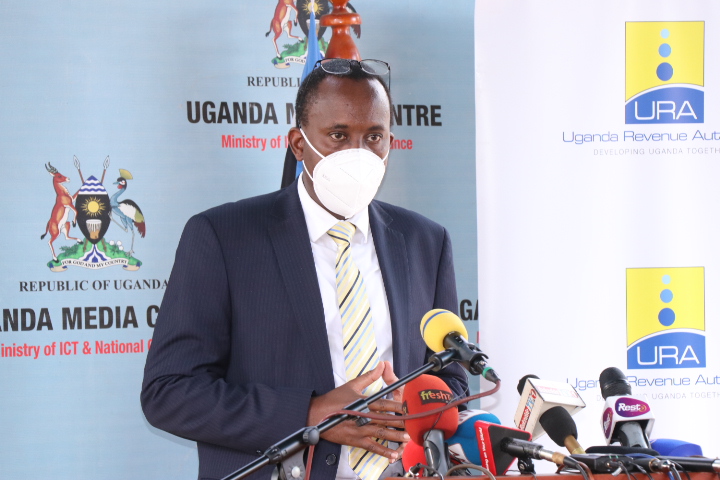
The National Budget Month (NBM) FY2021/22 will run for three weeks from 25th May to 9th July 2021, CEO East Africa Magazine has learnt.
The NBM seeks to increase public awareness and publicity for the National Budget as well as to address negative public perceptions about the National Budget and the Ministry.
Running under the theme: “Sustainable Industrialization for Inclusive Growth, Employment and Wealth Creation”,the NBM is expected to address a number of issues that include;
Lack of a formal mechanism through which feedback can effectively influence Government policies, new economic challenges/ opportunities presented by COVID-19 and how they can be dealt with, how poor quality of public services provides a platform for discrediting the Budget and the Ministry and how the Public continues to yearn for details of the Budget in order to take advantage of the opportunities therein.
Objectives
The NBM for FY2021/22 will be held with specific Objectives which include; Inspiring public ownership of the National Budget and buy-in for Government programs, equipping the public with knowledge to take advantage of the opportunities in the Budget, increasing collaboration amongst providers of public services for better service delivery, Heightening public accountability and service delivery by Government MDAs, increasing public awareness about their tax obligations to facilitate voluntary tax compliance; and increasing public awareness about Budget Transparency Initiatives for enhanced monitoring of Government programmes.
The National Budget Month is held by Ministry of Finance, Planning and Economic Development, in partnership with Uganda Revenue Authority (URA), Civil Society Budget Advocacy Group (CSBAG), Advocates Coalition for Development and Environment (ACODE), Overseas Development Institute Budget Strengthening Initiative (ODI-BSI), Southern and Eastern Africa Trade Information and Negotiations Institute (SEATINI) and the Private Sector Foundation Uganda (PSFU).
How URA has re-positioned to deliver on her Mandate
As an implementing partner in the National Budget process, URA has re-positioned itself in order to deliver on its mandate.
“In order to deliver on the expectations from Government in the medium and long term, URA has re-positioned herself by redefining her Mission, Vision and Core values, while placing special attention to the integrity of our staff, processes and systems.
“We believe that it’s through this that we shall be able to improve service offering to our esteemed Clients, re-build URA’s Credibility, improve Compliance levels and ultimately delver Uganda from Economic dependency,” says John Rujoki Musinguzi, URA Commissioner General.
New Vision: “A Transformational Revenue Service for Uganda’s Economic Independence”
New Mission: “Mobilise Revenue for National Development in a Transparent and Efficient Manner”
New Values:
- Patriotism – Our actions shall be driven by a sense of devotion to our organization and motherland and a willingness to sacrificially serve.
- Integrity – URA’s people, processes and systems serving as promised. Every task, conversation, encounter and learning opportunity shall be met with honesty and the desire to do what is right.
- Professionalism – URA shall develop Competent, dependable, responsive, productive, innovative, agile and collaborative staff that delivers excellent services.
Measures to be implemented
In order to meet and exceed Clients and Stakeholder expectations, URA has prioritised the following interventions, to be implemented both in the short & medium term:
Improve our people and Governance – This will entail among others, developing the desired URA staff culture, integrity enhancement, structural review and functional alignment, enhance Institutional Memory and Knowledge Retention, introducing multi-dimensional selection and recruitment assessment for the different levels.
Process Improvements – Process re-engineering, automation of manual process, processes integration. Simplification and standardization,
Improve Tax Education – Review the scope of Tax Education, simplification, and institute mobile taxpayer services (Mobile bus for registration, education and compliance)
Improve Stakeholder management – Map and profile all URA stakeholders, leverage both Local and National leaders and raise the profile of stakeholder management
Related
 The Future is Creative: Gen Z, Talent, and the New Workforce Reshaping Uganda’s Advertising Industry
Tax base Expansion & Maintenance – Research on new tax handles and grow the tax register
Technology and Data – Enhance data security, simplifying the systems for the taxpayers, improve availability of services and improve the capacity of IT infrastructure.
Performance of Tax Policy measures FY 2020/21
- As at end April 2021, URA had collected UGX 15.585 trillion against an annual target of UGX 21.63trillion, which is 72.05% of the total revenue.
- Tax policy and Administrative measures for this FY contributed UGX 905.93Bn as at the end of March 2021, against a target of UGX 854.88 Bn. Out of this, Arrears management contributed UGX 709.37Bn mainly attributed to implementation of Alternative Dispute Resolution and efficiency gains in the arrears management process.
Performance of Tax policy and Administrative measure:
| Measure | Revenue Gain/Loss FY 2020/21 | Actual Yield July to March | Performance level | |
| A | Income Tax | 17.00 | 3.02 | 17.76% |
| B | Excise Duty | 305.78 | 160.25 | 52.41% |
| C | Value Added Tax | (81.00) | (8.23) | 10.16% |
| D | Stamp Duty | (33.20) | (26.64) | 80.24% |
| E | Customs | 180.00 | 19.20 | 10.67% |
| F | Road Safety Act 2018 | (81.70) | – | 0.00% |
| H | Administrative Measures | 548.00 | 758.32 | 138.38% |
| Total | 854.88 | 905.93 | 105.97% |
Tax Policy Measures FY 2021/22 considered and approved by parliament
In the FY 2021/22, URA has been given an interim revenue target of UGX 22,422.36Bn
Consequently, the taxman is looking at the following revenue generating tax policy measures that are expected to facilitate this collection:
- Income Tax
- Reduce depreciation rates allowable for some selected assets from 35% to 20% (UGX 30Bn)
- Discontinue concurrent deduction of initial allowances and depreciation in the first year of use of the qualifying asset (UGX 20Bn)
- Harmonize the tax regime for rental income derived by individuals and non-individuals with that of individuals i.e. Tax rate of 30% and providing for a cap of 75% expenses (UGX 13.53Bn). The objective is to ensure that taxpayers in real estate sector claim deductions that are directly related to expenses incurred in deriving the rental income of that building and this in a way will help the individual taxpayers with the provision for more allowable expenses moving from the 20% to a maximum of 75%.
- Review the capital gains tax regime by providing for inflation indexing (UGX 46.7Bn ). This will help avoid taxing inflation and encourage acquisition of capital for investment in the country which will lead to increased employment benefits for the nationals and Country’s GDP.
- Excise Duty
- Broaden the scope of taxation of plastics to cover all plastics (UGX 41 Bn)
- Reduce the excise duty on opaque beer from 30% or UGX 650 per litre whichever is higher to 20% or UGX 230 per litre whichever higher (UGX5.0Bn) is. This will help to promote production of beverages made from local raw materials and will subsequently create jobs for Ugandans employed in the sector.
- Introduce excise duty on fermented Beverages (UGX 10Bn). This will help distribute the tax burden, improve equality and compliance amongst all producers and taxpayers and also raise revenue for Government.
- Introduce excise duty on alcoholic beverages (UGX 2.5Bn). This will help create healthy competition amongst the sector players and also raise revenue for funding Government activities.
- Introduce a harmonized excise duty rate of 12.0% on airtime, value added services and internet data (UGX 60Bn). This policy is intended at removing the burden of OTT which has been a great factor for compliance challenges and enhance equality on mobile and data users.( Note; key sectors on Health, education and research are exempted here
- Impose excise duty of UGX 100 per litre of fuel (UGX 90Bn)
- VAT
Remove the exemption on the supply of all production inputs into limestone mining and processing into clinker in Uganda and the supply of clinker for further value addition in Uganda (UGX 10Bn). This policy is aimed at reducing the cost of production since it will allow for claim of input VAT by the players.
- Fish
Introduce an export levy of 8% on the total value of fish maw exported (UGX 10Bn) (To promote value addition and make Uganda’s export attractive to the foreign markets and bring more foreign exchange into the country)
- Tobacco Control
Impose a levy on leaf tobacco at the rate of US Dollars 0.8 per Kg of leaf tobacco exported out of Uganda (UGX 20Bn) – (To increase the flow of foreign exchange into the economy and improve our balance of trade.)
- Mining
Impose export levy of 5% on processed gold and 10% of the value of unprocessed minerals (UGX46Bn). This is intended to increase the country’s benefits from the export of the minerals that have been imported into the country for processing as well as locally sourced minerals
Background to URA participation in Annual Budget breakfasts
In a bid to make tax policy, as presented in the National Budget speech, clearer and understandable to the taxpayer and general public, URA organizes Annual budget breakfast events that take place after the budget has been read.
These events that started in Kampala a few years ago, have now been spread to all regions of the country and they take place on the same day.
- On 15th June 2015, URA in partnership with Ministry of Finance Planning and Economic Development (MoFPED); PricewaterhouseCoopers and Standard Chartered Bank hosted the first ever Post Budget Analysis Seminar for Small and Medium Scale Enterprises (SMEs) and the general public. This seminar was geared towards raising awareness on the 2015/2016 budget, and the rationale behind the new tax measures and their implications to taxpayers.
- The subsequent Annual Budget events were held on 14th June 2016 and 12th June 2017, and were dubbed “Eno Budget Yo” (This is your Budget), and was expanded to cover all regions across Uganda at same time same day.
- In the last two financial years, URA has been organizing Budget Breakfast in partnership with MOFPED and CSBAG (Civil Society Budget Advocacy Group). The first was from 5th – 19th June 2018 with the specific objectives of improving the Ministry’s image; articulate the services that the Ministry offers and to heighten public ownership of the National Budget.
- The Budget Breakfast day that took place on 18th June 2018 was held in Kampala, Arua, Jinja, Fort Portal and Masaka.
- In the subsequent year, the breakfast was on 25th June 2019 and held in Gulu, Mbale, Masaka, Hoima and Kampala.
Publications
URA publications and events that come with the Budget breakfast, geared at enhancing awareness in the Public about their tax obligations are; A tax Incentives guide for Investors in Uganda, 1st Edition Sept 2017, My Taxes Work publication and Tax Clinics and Radio/TV shows.
Achievements since implementation of the NBM
Since its inception, the National Budget Month has enhanced public awareness and understanding of the National Budget, according to proponents, provided an opportunity for citizens’ engagement in the Budget process, heightened accountability by Government MDAs; and, improved structured engagement within Government and with other players.