Cipla Quality Chemicals Ltd, Uganda’s top manufacturer of medicines has in recent years faced declining profits occasioned by a fall in revenues, making Shareholders uneasy.
The Capital Markets Authority’s latest report shows that Cipla’s shares posted one of the biggest price fall on the Uganda Securities Exchange, alongside Uganda Clays Ltd. This comes at the time the company is implementing expansion plans, including the acquisition of Quality Chemical Ltd’s distribution arm of the Cipla India manufactured prescription medicines in Uganda.
The acquisition is expected to boost the company’s sales growth by expanding its product range while unlocking new business opportunities in the retail distribution market. The company hopes this will support its planned venture into the private sector market.
The CEO of CiplaQCIL, Nevin Bradford, says: “The businesses revenue streams have previously primarily been focused on government and donor-funded sales. This recent acquisition is an exciting entry for the business into the private retail pharmaceutical market in Uganda.”
Local production had mainly focused on HIV anti-retroviral and antimalarial drugs, but the Indian deal will see it also distribute medicines for treatment of asthma, chronic obstructive pulmonary disease (COPD), diabetes, infections, gastroenterology, and cardiovascular disease.
With these developments, Cipla hopes to respond to the discontent by shareholders over its profitability.
Last year, the company made a loss of UGX23 billion, down from a profit of UGX 6.786 billion, resulting from the continued delay of payment by the Government of Zambia of a debt worth US$ 12 million (over UGX44 billion), for supplies made more than two years ago.
In their online engagement dubbed “facts behind the figures” arranged by the Uganda Securities Exchange, the company’s management expressed hope that it will return to profitability in the short term.
They say the Zambian debt is the cause of the big loss posted, after the company adjusted its books to include the provision for this debt as an expense.
This was after it was advised to follow the International Financial Reporting Standard (IFRS) 9. Under this, a company is expected to show the current value of an asset not the original value.
And in this case, the Zambia debt cannot be taken as an asset after taking so long without being repaid, hence the provision for its impairment.
Shareholders had during the engagement sought to know when the debt would be repaid, and were also concerned that despite the Zambia experience, Cipla continues to supply on credit.
Frederick Kakooza, the Chief Finance Officer, said that if the company is to grow and meet its growth demands, giving credit is inevitable.
When the company released it’s it’s financial statement for the year 2019/2020, it declared no dividends for the Shareholders, since it made no profits.
Currently, the share of the company earns a loss to the investor, compared to a margin of sh 1.86 per share, earned for the previous year.
Cipla has plans in place to help turn around its fortunes, including expanding the local market. Last year, while it suspended sales to Zambia, it opened up a market in Botswana for ARVs, but also sustained supply to international health organizations, for operations in the country.
These included the Presidential Malaria Initiative, the first supply to a US-funded program, while the Global Fund also increased its orders to US$ 16 million, up from 2.6 million in the previous year.
William Nyakatuura, the Chief Instructor at Kinsman Advisory blames Cipla for not taking adequate precaution when doing business that has led it to the current situation.
The company’s local sales increased by 18% during the year, and this helped to almost offset the the deficit left by the cessation of supply to Zambia, as the total sales amounted to US$ 193 million down from 195 million.
This growth however, is being affected by the growing local competition, which in some cases forced Cipla to cut prices.
Cipla has also released plans to increase production by utilizing the space left by the old quality testing laboratory, having acquired a new quality control laboratory. This will also help cater for the newly opened markets in eight Southern Africa and two in West Africa, on top of the five countries in the East African Community. This, Cipla’s Kakooza says, will help the company recover quicker than the public thinks, but he can’t be sure when it will resume paying dividends.
Cipla Convinces Shareholders of a Turnaround in company fortunes
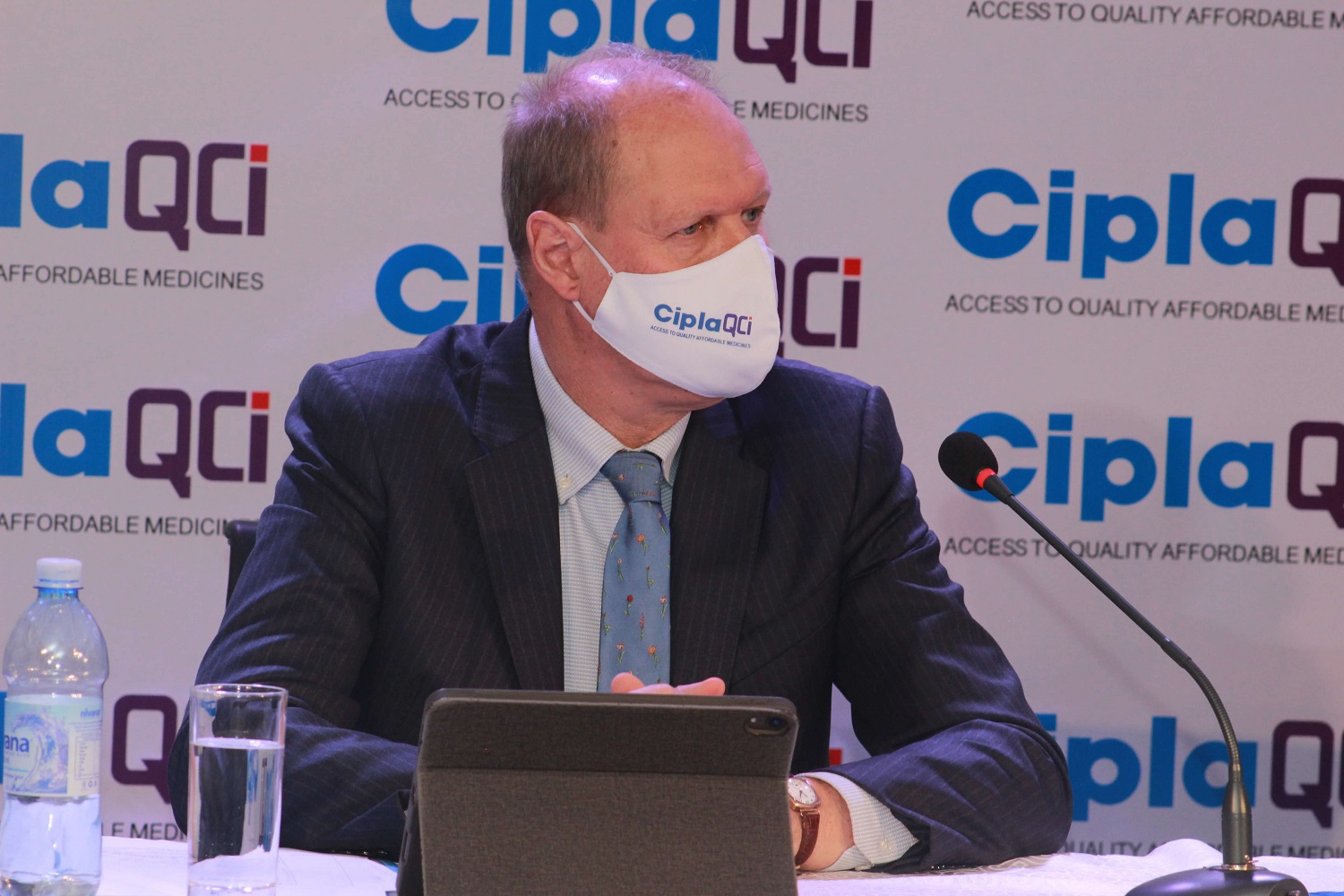
Nevin J. Bradford, CEO of CiplaQCIL