You flip the switch and power is on. You pull out your work tool and sit down to work from home and within minutes power goes off and your frustration builds. If you have access to social media you post cursing your electricity supply company. If your electricity company maintains a helpful social media presence, they will respond, soothing you and assuring you that help is coming. Help will indeed come.
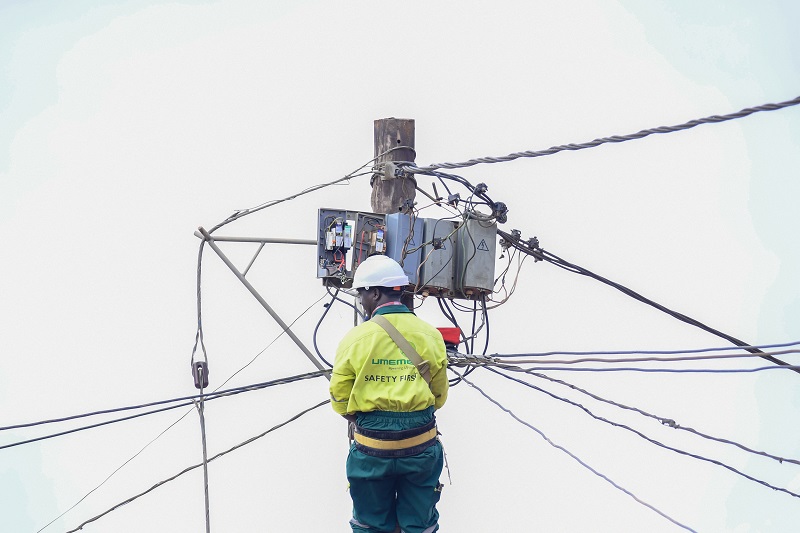
You will see them sometimes in the dead of the night, on a sunny Sunday afternoon, hanging by the belt on an electric pole, with beads of sweat rolling down their faces and napes.
This is true if you are among the 27% of Ugandans that have access to the grid. Many Ugandans in rural areas still don’t have access to clean energy even though there are programs running to close this gap. That’s a conversation for another day.
The global Coronavirus pandemic has greatly disrupted this otherwise straightforward routine. At the time of writing this, the confirmed cases in Uganda are 44 and the government has announced a total lockdown. People have been encouraged to work from home except those in essential services like electricity. Uganda will overcome this corona various, even faster, when everyone complies with the directives of government that include staying at home.

Along the electricity value chain, automation of processes is most critical in power generation plants like Bujagali, Isimba, and even solar plants. By giving control tools to their staff to work from home, power generation companies can reduce their staff movements, therefore, reducing their exposure to the deadly virus. It is not unusual to find a power plant like Isimba manned by just 2 people on-site or even on their mobile devices at home. Let’s be nice to the guards, the cleaners and the food delivery guys that work at such power plants during this time. Such are the silent heroes we never see or hear about.
Once the power is generated, the need to move increases. The transmission company is required to deliver electricity in bulk mostly to urban centres or industrial areas. Most of their operations are automated and they can control big power substations with a tap on their mobile devices. They also maintain front-liners who in some cases have had to rebuild pylons and towers vandalized by some criminal and greedy Ugandans. If there was to be a repeat of the same during this Coronavirus pandemic, those front liners in blue overalls would have to be required. They are on standby.
With the right automation, in both the generation and transmission segment, it is easier to implement “Work from home” for Utility workers. Things start getting complex when it comes to the distribution of electricity to millions of households and businesses.
Full automation of a distribution grid is still expensive in a country where end-user tariffs can hardly absorb the capital investment needed. Everyone would love to have a trouble-free interaction with their power supplier. An interaction in which power is always safely on.
In Uganda, this is not yet possible and the reasons are many; the prohibitive cost of a smart grid and the fact that most urban centres are lacking in physical planning.
 Companies Rise or Fall on How Well They Renew Their Leaders
Currently, Uganda is adding an estimated 220,000 new customers to the distribution grid annually. These will need to be served using personnel. In fact, it is a good time in Uganda today to have gone to a technical school and studied an electrical engineering course. The future is bright for you.
While Umeme Limited indicated, in their 2019 results, that they had reduced the cost of serving each customer by 13% to UGX146,505 compared to UGX169,464 in 2018, the need to keep technicians moving during this period of #StayHomeStaySafe remains obvious because of many reasons.
In the past 3 years, Umeme has recruited over 200 new technicians extending this group to over 350 across the country, doing various technician roles in metering, faults resolution, and maintenance of the grid. These are the front liners who stay at work so that we can stay working from home.
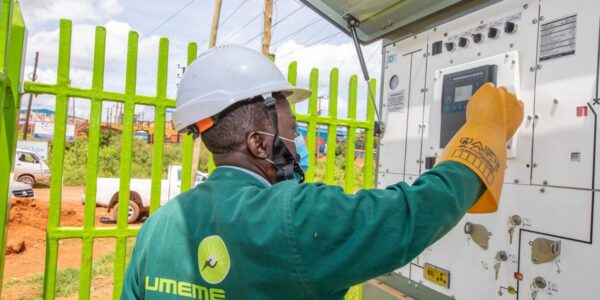
They bid their loved ones a good day with a look of fear. Fear of contracting the dreaded Covid-19 as they go about their work of safely restoring power supply to households and businesses, battling in concert, to defeat the virus.
Umeme has, in consultation with the Ministry of health, provided the required personal protective equipment like working goggles, hand sanitizers, vehicle sanitizers, and gloves, etc. You can help protect our front-liners too by maintaining the recommended 4 meters social distance if they come to your premises or village.
In the normal course of their duties, power may go off in your village, estate or apartment block. This shouldn’t cause worry; reach Umeme or your electricity service provider through their digital platforms. You will be assisted. When you stay at home, and our front liners stay at work; we are both flattening the Covid-19 curve.
Do your bit.
David Birungi is Manager Stakeholder Relations at Umeme Ltd